

Are Detachable Buckles Durable? What Matters Most
A belt buckle is often the first part of an outfit to catch the eye, but it also carries the daily work of holding a belt securely in place. So, are detachable buckles durable? When they are made with substantial materials, accurately fitted to the strap and treated with sensible care, they can offer years of dependable wear - while giving one belt wardrobe far greater range.
The distinction lies in construction. A detachable buckle is not inherently less durable than a fixed buckle. In fact, a well-made interchangeable system can protect both components by allowing the wearer to choose the right buckle for the occasion, rather than relying on one belt for every setting. The weakness is never the idea of interchangeability itself. It is usually lightweight hardware, a poorly proportioned fastening, or a strap that has not been made to work with the buckle.
Are Detachable Buckles Durable Enough for Daily Wear?
Yes, provided the buckle and belt are designed as a considered pair. A detachable buckle should fasten firmly to the leather without pulling, slipping or placing undue strain on the strap end. The mechanism may be simple, but its measurements matter: the width of the buckle bar, the position of the pin, the shape of the frame and the thickness of the leather all need to sit in balance.
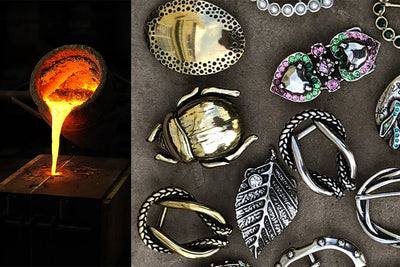
For daily wear, solid brass is particularly valued. It has a satisfying weight, resists ordinary wear well and develops character over time rather than becoming brittle or thin. Quality plated finishes can also perform beautifully, especially when the base metal is substantial and the finish has been applied with care. A silver-plated or aged-metal buckle deserves the same thoughtful handling as any fine accessory, but it should not feel precious to the point of impracticality.
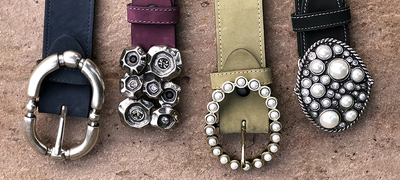
A buckle intended for a wide leather belt must have a frame and bar proportioned for that weight. A refined narrow buckle, meanwhile, needs clean edges and accurate tolerances so it holds a slimmer strap securely. Interchangeable does not mean universal in a careless sense. The most durable systems use components designed to fit together properly.
The Materials Behind a Long-Lasting Buckle
Metal quality is the foundation. Hardware made from thin, hollow or low-grade alloy can bend at pressure points, lose its finish quickly, or develop looseness around the pin. This is especially noticeable on belts worn frequently with denim, tailoring or heavier outerwear, where the buckle is adjusted and flexed throughout the day.
Solid brass offers strength and an enduring presence. It is also well suited to polished, antiqued and plated finishes, making it a natural choice for classic, equestrian and contemporary belt designs. Its weight should feel reassuring rather than cumbersome. A good buckle has substance, yet sits comfortably at the waist and complements the line of the garment.
The buckle pin merits close attention. It should move freely enough to fasten without force, but not wobble in its housing. A pin that catches against the frame can mark the metal and encourage unnecessary stress on the leather holes. Equally, one that feels excessively loose may be a sign of imprecise construction.
Crystal buckles require a slightly different view of durability. Their metal frame should be strong and the settings secure, but embellishment calls for more considered wear than an unadorned brass style. A crystal buckle is ideal for dinners, events and occasions when a belt is intended as jewellery for the waist. It can last exceptionally well when stored carefully and protected from knocks, although it is not the natural choice for hard outdoor use.
The Strap Matters as Much as the Hardware
Even the finest buckle cannot compensate for inferior leather. The buckle end of a belt experiences repeated pressure whenever it is fastened, removed or adjusted. Full-grain leather, vintage calf and quality Italian nubuck have the body needed to support a buckle over time, particularly when the strap has been cut, edged and finished by skilled hands.
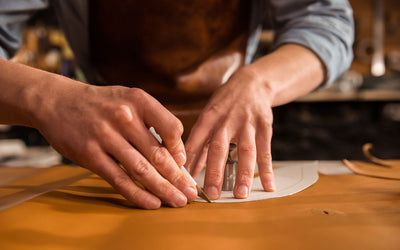
A leather strap should be neither so soft that it collapses around the hardware nor so rigid that it fights the curve of the body. This balance is one reason handmade belts tend to wear so gracefully. The artisan can select and work the hide according to its natural character, creating a strap that feels supple while retaining structure where it counts.
Hair-on cowhide and suede styles can be long-lasting too, though their surfaces invite a different care routine. Avoid dragging the buckle across the finish when changing components, as friction can disturb the nap or hair. Hold the strap close to the fitting, release it gently and lay both pieces on a clean surface before selecting the next buckle.
At Clara Perri, the value of an interchangeable belt lies in this relationship between handcrafted leather and carefully chosen hardware. A buckle should refresh the character of a strap without compromising the integrity of the belt itself.
What Shortens the Life of a Detachable Buckle?
Most premature wear comes from avoidable pressure rather than ordinary use. Forcing a buckle onto a strap of the wrong width can score the leather edges, distort the buckle bar and make future fastening less secure. A detachable system should feel deliberate, not improvised.
Moisture is another consideration. Leather can absorb water, swell slightly and dry with a changed texture, while plated hardware may lose its lustre if left damp or exposed repeatedly to perfumes, lotions and cleaning products. Remove a belt before vigorous exercise, swimming or prolonged rain. If it does become wet, pat it dry with a soft cloth and allow it to dry naturally away from direct heat.
Storage makes a quiet difference. Leaving buckles loose at the bottom of a drawer invites scratches, especially where crystal, polished metal or plated surfaces are concerned. Store individual buckles in a soft pouch or lined compartment. Belts can be hung by their straps or laid flat with the buckle detached if space permits. This prevents the leather from being permanently creased at one fastening point.
It is also worth rotating your buckles. Wearing the same piece every day is entirely possible with quality hardware, but alternating between styles reduces repeated contact at the same areas and lets each buckle retain its finish for longer. More importantly, rotation lets a well-chosen belt work across a genuinely varied wardrobe: a polished buckle for tailoring, aged brass for weekend denim, or crystal for evening wear.
How to Change a Buckle Without Damaging It
Changing a detachable buckle should take moments, not effort. Place the belt on a clean, flat surface and release the fastening with the strap supported in one hand. Avoid twisting the buckle against the leather or pulling the strap sharply through the frame. If the fit feels unusually tight, check that the buckle is intended for that strap width rather than applying more force.
Before attaching another buckle, inspect the inside edge of the frame and the buckle bar. A quick wipe with a dry, soft cloth removes dust and skin oils that can dull metal over time. Check the leather end as well. If the strap looks compressed, give it a little time to rest flat before fitting another buckle, particularly with softer nubuck or suede.
The goal is not to handle a belt anxiously. Fine accessories are made to be worn. It is simply a matter of treating each change as part of the ritual of dressing, much as one selects shoes, jewellery or a watch.
When a Fixed Buckle May Be the Better Choice
A fixed buckle has its place. For a belt that will be subjected to repeated heavy-duty use, or for someone who never wishes to alter the look of their belt, a permanently attached buckle may be the simplest option. There is one fewer component to handle, and the design can be built around a single purpose.
Yet for most wardrobes, a detachable buckle offers a practical kind of luxury. It allows one exceptional leather strap to take on different moods and occasions, rather than purchasing several lower-quality belts that serve only one look. The long-term value comes from versatility, but only when the components are made to a standard worth keeping.
Choose hardware with real weight, leather with lasting substance and a fitting designed for the precise strap in hand. Then changing your buckle becomes less a compromise in durability and more a considered way to make a fine belt distinctly your own.
Leave a comment