
Best Belts for Tailored Trousers, Chosen Well
A beautifully cut trouser can lose its clarity in a moment if the belt is too heavy, too casual or simply the wrong proportion. The best belts for tailored trousers do more than hold the waist in place: they refine the line between shirt, jacket and trouser, introducing considered leather and discreet hardware without interrupting the silhouette.
For a wardrobe built around wool flannel, crisp cotton, linen or fine crepe, a belt should feel like part of the tailoring rather than an afterthought. The right choice depends on the width of the belt loops, the formality of the occasion and, above all, the character of the trousers themselves.
What makes a belt right for tailoring?
Tailored trousers ask for restraint. Their clean waistband, pressed crease and deliberate drape already create visual structure, so a belt should support that structure rather than compete with it. In most cases, a slim to medium-width leather strap with a polished but unfussy buckle is the most flattering answer.
For men’s tailored trousers, a width around 30 to 35 mm is usually appropriate. It sits comfortably in standard loops and gives sufficient presence beneath a jacket without becoming bulky. For women’s tailoring, the answer is more flexible. A 20 to 30 mm belt can sharpen a high-waisted trouser elegantly, while a slightly wider style can bring definition to relaxed pleats or a soft, wide-leg cut.
The finish matters as much as the measurement. Full Grain leather, smooth calf and fine Italian Nubuck each offer a composed surface that suits formal dressing. Suede can work beautifully with less structured tailoring, especially autumnal flannel, corduroy or brushed wool, but it has a softer, more relaxed character than polished leather.
Best belts for tailored trousers by occasion
For the office and formal appointments
A smooth black or deep brown leather belt remains the essential choice for business tailoring. Select a strap with a neat edge finish and a small solid brass or silver-plated buckle. The hardware should be refined rather than conspicuous, with a scale that sits comfortably beneath the buttoned front of a jacket.
Black is particularly effective with charcoal, navy and black trousers. Dark brown offers warmth beside mid-grey, olive, tobacco and navy, while a rich burgundy can bring quiet distinction to grey flannel or a deep blue suit. The aim is not rigid matching for its own sake, but harmony. With formal shoes, the leather tone should look intentionally related, even if it is not identical.
For women, a slim black belt with an understated polished buckle is an assured partner to cigarette trousers and a tailored blazer. It defines the waist without crowding the clean lines of a silk blouse or fine-gauge knit. A dark chocolate strap can be equally sophisticated with cream, camel or soft grey suiting.
For contemporary tailoring and dinner dressing
Evening tailoring permits more personality, provided the proportions remain disciplined. A black leather belt with aged-metal hardware, a deep navy nubuck strap or a fine buckle with a restrained crystal detail can add interest to a trouser suit without diminishing its polish.
This is where texture becomes particularly useful. Matte Italian Nubuck against satin lapels, or vintage calf with a subtly burnished finish beside crisp black wool, gives an outfit depth that does not rely on loud colour. The buckle should still be slim enough to sit neatly at the waistband. A large plaque or overtly casual roller buckle can pull the eye downwards and make even excellent trousers appear less refined.
A crystal buckle has its place with tailored trousers for an evening event, particularly when the rest of the look is pared back. Choose one clear focal point. If the buckle carries light, keep jewellery and other metal details purposeful rather than excessive.
For relaxed tailoring and weekend wear
Tailored need not mean strictly formal. Pleated trousers, linen blends and drawstring-inspired cuts often welcome a belt with a little more texture. Suede, soft nubuck and vintage calf leather add an easy, tactile quality that works with loafers, knitwear and unstructured jackets.
A medium brown suede belt is especially versatile with stone, ecru, faded blue and olive trousers. For summer, lighter tan leather provides definition against linen without looking severe. Here, a slightly more rounded buckle can feel appropriate, but scale remains decisive. The belt should still pass through the loops without bunching the waistband or adding unnecessary bulk.
Choose width before colour
Colour is often the first consideration, yet width has the greater effect on whether a belt looks natural with tailored trousers. A belt that is too wide can overwhelm narrow loops and interrupt the vertical line of the legs. One that is too narrow may look tentative against substantial pleats, broad waistbands or wide-leg trousers.
Look closely at the trouser loops before choosing. Fine belt loops generally call for a refined strap, while more generous loops can support a moderate width. Avoid forcing a thick casual belt through tailored loops. It can distort the waistband, damage the leather over time and make the fit feel less comfortable when seated.
High-rise trousers create a further consideration. Because the belt is positioned closer to the natural waist, it becomes a more visible part of the outfit. A narrow strap with a graceful, centred buckle can accentuate this proportion beautifully. With lower-rise or drop-waist tailoring, a wider but still supple belt can offer a more balanced line, especially over knitwear or a tucked-in shirt.
The buckle should complement, not dominate
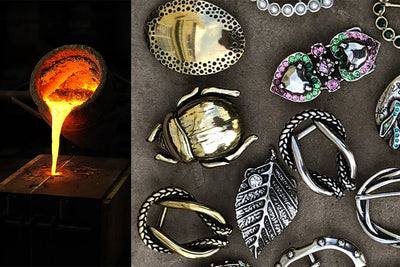
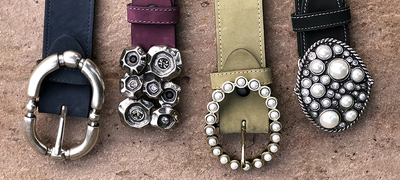
A buckle is jewellery for the waist, but tailored trousers reward precision. The best choice is often a frame buckle with clean contours, in solid brass, silver plating or a softly aged finish. These materials bring substance and longevity, while their restrained shine works easily across workwear and occasion dressing.
Match the mood rather than obsessing over every metal detail. Silver-toned hardware sits naturally with cooler tailoring shades such as charcoal, black and navy. Warm brass is particularly handsome with brown leather, camel, olive and cream. If a watch, cufflinks or handbag hardware are present, a related metal tone creates a pleasing sense of order.
Interchangeable buckles are especially useful for a tailored wardrobe because they allow one exceptional leather strap to work across several settings. A polished buckle can serve weekday suiting; an aged-metal or crystal option can shift the same belt towards a dinner or event look. It is a considered approach to luxury: fewer pieces, chosen for quality and worn with greater versatility.
Leather quality shows in the smallest details
With tailoring, close inspection is inevitable. A belt is often seen at eye level across a meeting table, at a restaurant or when a jacket is removed. This is why leather quality, edge finishing and buckle construction matter.
Full Grain leather develops a distinctive patina with wear, making it a strong choice for those who value a belt that becomes more individual over time. Italian Nubuck offers a velvety, elevated texture, while vintage calf brings a more characterful finish that works particularly well with relaxed or heritage-inspired trousers. Whichever leather you choose, look for a strap that is supple enough to sit smoothly around the waist but structured enough to retain its shape.
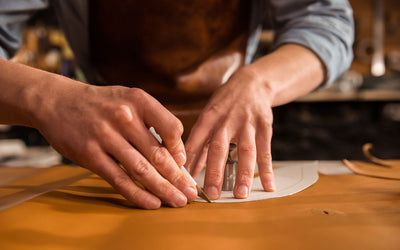
A well-made belt should not crack at the holes, curl at the edges or feel stiff and cumbersome against the waistband. Handmade in England, Clara Perri belts are designed with this balance in mind, pairing carefully selected leathers with detachable buckles so that proportion, finish and personal taste can be considered separately.
Getting the fit exactly right
A tailored belt should fasten comfortably at the centre hole, leaving a short, tidy tail after the keeper. Too much excess leather can look casual and disrupt the clean front of the trousers; too little can suggest the belt is undersized. Measure a belt that already fits well from the buckle fold to the hole you use most often, rather than relying only on trouser size.
If you wear your trousers at different heights depending on the cut, allow for this when choosing length. High-waisted trousers may require a different measurement from jeans or lower-rise styles. It is worth checking fit with the shirt or knitwear you expect to wear tucked in, as a fine cotton poplin shirt and a heavier merino knit will alter the circumference slightly.
The most enduring belt for tailored trousers is not necessarily the most decorative one. It is the piece whose leather, width and buckle feel so well judged that the outfit looks complete before anyone notices why.
Leave a comment