

Custom Belt Hardware for a Distinctive Finish
A belt can be cut from exceptional Italian leather and finished by hand, yet its character is often decided at the fastening. Custom belt hardware is the detail that gives a belt its point of view: polished or aged, restrained or decorative, equestrian or contemporary. It is where material, proportion and personal style meet.
For a wardrobe built around considered pieces, the buckle should never feel like an afterthought. Its weight in the hand, the curve of its frame and the way its finish sits against leather all influence how the finished belt wears. The right choice can sharpen a tailored trouser, lend structure to a flowing dress or give familiar denim a more individual finish.
Why custom belt hardware changes the whole design
A buckle is functional, but it is also the focal point of a belt. Unlike a small clasp hidden at the back of a necklace, belt hardware sits visibly at the centre of an outfit. Its scale is immediately noticeable, particularly with high-waisted trousers, wide belts and drop-waist silhouettes.
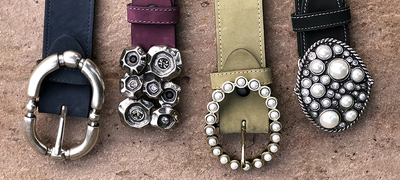
Customising the hardware allows the belt to work with your wardrobe rather than asking your wardrobe to accommodate it. A refined silver-plated buckle may suit cool-toned jewellery and crisp monochrome tailoring. A solid brass finish brings warmth to cognac, chocolate and vintage calf leather, and develops a character of its own through regular wear. Aged-metal finishes offer a more relaxed, collected feel, particularly on suede, nubuck and hair-on cowhide.
There is also a practical advantage. With an interchangeable belt system, a single beautifully made strap can take on a different role simply by changing the buckle. A classic frame buckle for the working week can become a crystal or decorative piece for dinner, without the need to buy an entirely new belt each time. It is a more considered way to build variety into an accessories collection.
Choosing custom belt hardware by proportion
The most successful combination begins with proportion. Hardware should complement both the width of the strap and the scale of the wearer’s clothing, rather than compete with either.
Narrow straps and refined buckles
A narrow leather belt benefits from a neat, elegant buckle with a clean profile. This pairing works especially well over dresses, through tailored belt loops or at the waist of a skirt. Fine Italian nubuck and supple suede are particularly effective here, where a small polished metal buckle adds definition without interrupting the softness of the leather.
For occasions where you want the belt to feel discreet, choose a simple oval, rectangular or softly rounded buckle in a finish that relates to your existing jewellery. The result is polished rather than overt.
Wide belts and architectural hardware
Wider straps create room for more expressive custom belt hardware. A substantial buckle can balance the visual weight of a wide full-grain leather belt, making it an assured choice over knitwear, blazers and outerwear. Equestrian-inspired buckles, with their distinctive curves and solid presence, are especially suited to this silhouette.
The trade-off is versatility. A large statement buckle may be perfect with a simple column dress or high-rise denim, but less practical under close-fitting layers. If you favour one wide belt for many settings, a clean, weighty frame in solid brass or silver plating will generally offer greater longevity than an overly elaborate design.
Match the buckle to the belt loops
This detail is easy to overlook. The strap width must pass comfortably through the belt loops, but the buckle itself also needs enough clearance at the front fastening. Very broad buckles may not suit narrow-looped trousers, while a slim buckle can look lost against a wide waistband. When designing a belt, consider the garments it will serve most often: denim, tailored trousers, dresses or outerwear all ask for slightly different proportions.
Metal finishes and the mood they create
Metal finish changes the tone of the belt as much as the buckle shape. It is not simply a matter of choosing gold or silver. Surface, lustre and ageing all affect the final impression.
Polished silver plating feels crisp and light-reflecting. It complements black, charcoal, navy, white and cooler leather colours, and suits contemporary tailoring or minimal dressing. A silver finish can also provide a quiet contrast against richly textured hair-on cowhide, allowing the natural variation of the leather to remain the focus.
Solid brass has a warmer, more traditional presence. Its depth works beautifully with tan, oxblood, olive and dark brown leathers, as well as with the grain and colour variation of vintage calf. Brass is a natural choice for those drawn to heritage styling, classic denim and equestrian influences. Over time, it may acquire a gentle patina. Some prefer this lived-in quality; others favour the brighter appearance of regular polishing. Neither is more correct. It depends on whether you want the hardware to retain a pristine gleam or develop a more personal finish.
Aged-metal hardware sits somewhere between these two approaches. Its softened surface gives a belt an established, less formal character, making it particularly useful for relaxed weekend dressing. It can be striking on black leather too, where the contrast feels deliberate without being overly glossy.
Crystal embellishment takes hardware in another direction. A crystal buckle is designed to catch the light, and it brings an evening sensibility to otherwise simple leather. Pair it with a smooth black, deep navy or jewel-toned strap for a considered finish. Because the buckle already has visual detail, a cleaner leather texture usually gives it the strongest setting.
Pairing hardware with leather character
The leather and buckle should have a conversation. Smooth full-grain leather gives polished hardware a tailored, confident setting. Italian nubuck, with its velvety surface, softens the formality of a metal buckle and is particularly elegant in muted seasonal colours. Suede offers a more relaxed texture, while vintage calf brings depth and variation that suits brass or aged finishes.
Hair-on cowhide introduces pattern and tactile interest. Here, restraint is often the most effective choice. A simple buckle lets the leather take centre stage, whereas ornate hardware can make the overall design feel busy. Conversely, a plain black or dark brown strap offers a strong foundation for a more sculptural or crystal-adorned buckle.
This is where bespoke design becomes valuable. Rather than choosing a belt from a fixed combination, you can decide what should lead: the leather, the hardware or the occasion. The best result is usually one clear focal point, balanced by quality materials throughout.
Building a more versatile belt wardrobe
A small collection of interchangeable straps and buckles can cover far more ground than a row of single-purpose belts. Begin with the occasions you dress for most, then select components with a distinct role.
A polished, understated buckle paired with black or dark brown full-grain leather provides a reliable foundation for work and formal dressing. A solid brass or aged-metal buckle on tan, vintage calf or suede gives casual outfits greater character. For evenings, a crystal buckle or a more decorative silhouette can transform a slim, smooth strap with very little effort.
There is no need for every component to match perfectly. A silver buckle need not be worn only with silver jewellery, and brass does not demand a fully warm-toned outfit. The more useful question is whether the contrast looks intentional. A cool silver buckle against dark brown leather can be modern and refined; a warm brass buckle on black leather can bring welcome depth.
When selecting interchangeable pieces, consider how easily they will travel too. A few straps in different colours, combined with two or three carefully chosen buckles, take up little space and create options for city breaks, business trips and longer holidays. Quality hardware is particularly worthwhile here because it is handled frequently and should fasten with confidence, not feel flimsy or temperamental.
The details worth looking for
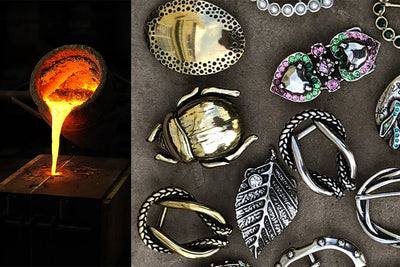
Luxury belt hardware should feel substantial but not cumbersome. Look for clean casting, even plating, smooth edges and a prong that moves securely. The connection between buckle and strap matters just as much, especially in an interchangeable design. It should be straightforward to change while holding the buckle firmly in place during wear.
Finish consistency is another sign of care. Whether you choose solid brass, silver plating or an aged surface, the metal should look deliberate across its frame, prong and fastening components. On decorative styles, crystals should be neatly set and balanced within the buckle design, allowing the piece to catch the light without compromising its structure.
At Clara Perri, each choice of leather strap and buckle is an opportunity to create something individual, made to be worn repeatedly rather than briefly admired. Choose the hardware that feels right in your hand, suits the clothes you reach for most, and gives your belt a signature all its own.
Leave a comment