
Design Your Own Belt With Lasting Character
A belt often begins as a practical finishing piece, then becomes the detail that gives an outfit its point of view. When you design your own belt, the choice is not simply between black and brown. It is an opportunity to bring together leather, hardware, proportion and finish in a combination that feels considered from every angle.
The most successful bespoke belt is one that earns its place in a wardrobe for years. It should work with the clothes you wear now, while retaining enough distinction to make a familiar blazer, silk dress or favourite denim feel newly composed. The pleasure lies in choosing each element with purpose, then knowing it has been handmade in England by skilled artisans.
Begin With the Way You Dress
Before considering buckles or leather finishes, think about where the belt will be worn. A narrow, supple strap with a polished buckle may be the natural choice for tailoring, while a wider belt can bring definition to knitwear, dresses and high-waisted trousers. For weekends, vintage calf or suede has an ease that works especially well with denim, corduroy and relaxed layers.
There is no single answer to the right width. A belt designed to sit through trouser loops needs a different proportion from one intended to shape a flowing dress at the waist. Drop-waist styles call for a longer, more relaxed line, whereas an equestrian-inspired belt often looks strongest when worn neatly through classic denim or riding-style trousers.
It also helps to consider the role the belt will play. If you prefer accessories that quietly complete an outfit, choose a refined strap and a discreet buckle finish. If the belt is intended to be the focal point, a sculptural buckle, hair-on cowhide or crystal detail can carry the look without requiring anything else to compete.
Choose Leather for Feel, Finish and Wear
Leather is where a belt gains its character. The visual difference between Italian Nubuck, full-grain leather and vintage calf is immediate, but the way each material settles into daily wear matters just as much.
Italian Nubuck has a softly brushed surface and a rich, velvety depth of colour. It lends itself beautifully to elegant everyday dressing, particularly in tonal shades that complement wool, cashmere and silk. It does require a little more consideration in wet conditions than a smooth leather, making it best suited to occasions when its tactile finish can be appreciated.
Full Grain leather offers a more classic structure. Its natural surface and lasting strength make it a compelling choice for a belt that will see frequent wear, from the working week to travel and weekends away. Over time, it develops a subtle patina rather than simply looking worn, which is part of the appeal of a well-made leather accessory.
Vintage calf brings softness and depth from the outset. It is especially effective when paired with aged-metal hardware, where the two finishes create an understated sense of history. Suede provides another relaxed option, adding texture without the visual weight of a highly polished leather.
For a more distinctive statement, hair-on cowhide introduces natural variation and tactile interest. This is often best treated as a wardrobe accent rather than an all-purpose belt. It can transform simple black trousers, a cream knit or a plain dress, but its expressive finish may be less versatile than a smooth neutral strap.
Design Your Own Belt Around the Buckle
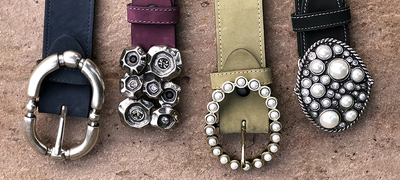
An interchangeable buckle system gives a belt its versatility. Rather than buying a complete new accessory whenever your mood or occasion changes, you can retain the strap you love and alter the hardware. A single black full-grain strap might feel pared back with a polished silver-plated buckle for the day, then take on an entirely different presence with crystal embellishment for dinner.
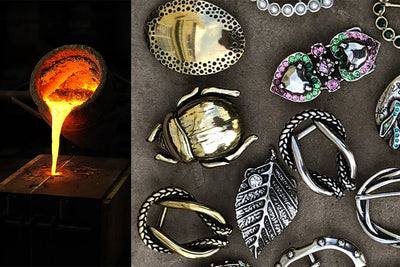
The buckle should be chosen in relation to both your wardrobe and the strap. Solid brass has warmth and substance, particularly against tobacco, tan, chocolate and deep navy leather. Silver plating offers a cooler, cleaner contrast that suits black, grey, ivory and jewel-toned straps. Aged-metal finishes are ideal when you want the buckle to feel collected rather than overtly polished.
Scale is equally important. A substantial buckle can balance wide-leg trousers, a heavy knit or a generous coat, while a smaller, more delicate design is often the better choice for fine dresses and streamlined tailoring. The buckle does not need to dominate to be noticed. A beautifully shaped, precisely finished piece of hardware has its own quiet authority.
Crystal buckles deserve a little styling judgement. They can look exceptionally elegant with evening tailoring, a simple black dress or a restrained monochrome outfit. For daytime, they are most convincing when the rest of the look remains uncomplicated. The contrast between practical leather and light-catching crystal is what makes the combination feel modern rather than overly formal.
Consider Proportion Before Selecting a Size
A beautifully made belt loses impact if its fit is an afterthought. The intended wearing position matters: a belt worn at the natural waist will require a different measurement from one worn low on the hips or through jeans. Measure where you plan to wear it, ideally over the clothing it will accompany most often.
A versatile fit usually allows room to adjust between lighter and heavier layers. If the belt is primarily for dresses, take the measurement over the kind of fabric you wear most. If it is for trousers, allow for the rise and waistband of those trousers. This small detail makes a noticeable difference to comfort and to the line the belt creates.
Think, too, about the end of the strap. A neatly proportioned tail can look intentional and relaxed, while too much excess can interrupt an otherwise polished silhouette. When choosing a wider or more decorative buckle, keeping the strap length and width in balance is particularly worthwhile.
Build a Combination That Will Keep Working
The advantage of personalisation is not that every element must be dramatic. Often, the most enduring design is built from a versatile foundation and one element of individuality. A deep brown vintage calf strap with a solid brass buckle, for example, can move easily between jeans, tailored trousers and a wool dress. Add a second buckle in silver plating and the same strap immediately answers a different wardrobe mood.
For those beginning a small belt wardrobe, a neutral smooth leather strap and a textured alternative are a useful pairing. Black or dark brown full-grain leather covers the most frequent occasions, while Nubuck, suede or hair-on cowhide introduces character when an outfit needs more texture. Interchangeable buckles then make each strap work harder without compromising on finish.
It depends, of course, on how you prefer to dress. Someone whose wardrobe centres on navy tailoring and crisp shirts may favour restrained silver hardware and slim leather straps. Someone drawn to equestrian pieces, soft knitwear and rich autumnal colours may find aged brass and vintage calf far more natural. Personal style is not improved by following a formula; it is clarified by choosing details that already feel at home with what you wear.
A Belt Made to Be Kept
Luxury is often described through rarity, but its real value is felt in use. A handmade belt should be satisfying to fasten, comfortable to wear and handsome enough to reach for repeatedly. The quality of the leather, the weight of the buckle and the care in the construction are not decorative claims. They are the reasons a piece can remain part of your wardrobe long after a passing trend has disappeared.
Clara Perri’s Design Your Own Belt experience makes that considered choice tangible: select the leather that suits your life, the buckle that reflects your eye, and the proportion that flatters how you wear it. The finished piece need not announce itself loudly. Its distinction is in the details you chose, and in the confidence of wearing something that was made with a clear place in your wardrobe.
Leave a comment