

Interchangeable Buckle Belts, Made to Last
A beautifully made belt should do more than hold a silhouette in place. Interchangeable buckle belts bring considered versatility to the wardrobe, allowing one exceptional leather strap to take on a different character through a change of hardware. A polished silver buckle can lend clarity to tailored trousers; aged brass introduces warmth to vintage calf; crystal transforms the same belt for an evening occasion.
This is not novelty dressing. It is a more intelligent way to invest in accessories: choosing materials with presence, construction with longevity and details that can evolve with how you dress. For those who favour a restrained wardrobe with room for individual expression, a modular belt offers both practical value and a distinctly personal finish.
Why interchangeable buckle belts deserve a place in a considered wardrobe
The appeal begins with proportion. A belt is worn at the centre of an outfit, where the eye naturally rests, so its buckle, leather texture and width have an unusually strong effect on the finished look. Changing a buckle may appear a small adjustment, yet it can shift an outfit from relaxed to formal, understated to decorative, or classic to contemporary.
A single narrow Italian nubuck strap, for example, may be worn with a clean solid brass buckle for daytime tailoring, then paired with a crystal design for dinner. A wider full-grain leather belt can move between equestrian-inspired hardware and a more minimal silver-plated buckle, depending on whether it is styling denim, a coat or a dress. The leather remains familiar and beautifully broken in; the focal point changes.
There is also a quieter advantage. Rather than acquiring several lower-quality belts in similar shades, it is possible to build a concise collection around a few excellent straps and a selection of buckles. This approach makes particular sense for travel, where a small edit of components provides more styling options without filling a case with duplicate accessories.
The strap is the foundation
The buckle may catch the light, but the strap determines comfort, shape and how the belt will age. Premium leather has a depth that is difficult to imitate. Italian nubuck has a velvety, refined surface that suits soft tailoring and dresses, while full-grain leather brings structure and a natural grain that becomes more distinctive with wear. Vintage calf offers a gently lived-in character, ideal when polish should never feel too pristine.
Suede and hair-on cowhide add texture, particularly effective against plain cashmere, crisp cotton or dark denim. Their tactility makes the belt an intentional styling element rather than an afterthought. The correct choice depends on use: a smooth leather strap is generally the most adaptable for regular wear, while a textured finish can become the defining piece in an otherwise quiet outfit.
Width matters as much as material. Narrow straps are elegant through belt loops and at the waist of a silk dress. Wider belts create greater definition over knitwear, blazers and coats, while drop-waist styles bring an easy, slightly undone line to longer shirts and fluid tailoring. A well-chosen strap should sit comfortably without twisting or pulling, whether worn at the natural waist, on the hip or through denim.
The buckle sets the mood
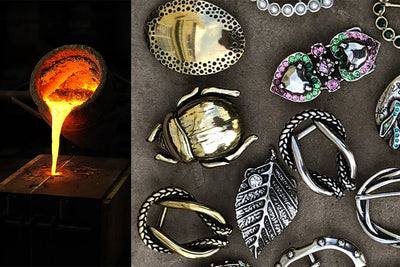
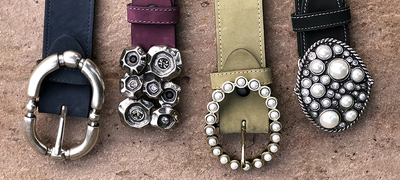
Buckle design is where function becomes expression. Solid brass has reassuring weight and a warm, enduring tone that works beautifully with brown, tan and black leather. It is especially persuasive alongside equestrian details, denim and heritage fabrics such as tweed or corduroy. Silver plating offers a cooler, cleaner note, often suited to monochrome dressing, evening separates and sharper tailoring.
Aged-metal finishes bring softness and character. They are less formal than high-polish hardware and can make a belt feel as though it belongs to a wardrobe built over time. Crystal buckles, meanwhile, offer luminosity without requiring excessive ornament elsewhere. Worn with a black dress, velvet trousers or a simple white shirt, they create a precise point of interest.
The most useful buckle is not necessarily the one that matches everything. It is the one that gives the pieces you already own a new direction. A wardrobe of neutral trousers, knitwear and dresses may benefit more from a single distinctive buckle than another neutral accessory.
How to build an interchangeable belt collection
Begin with the occasions that genuinely shape your week. If workwear and smart-casual dressing dominate, a black or deep brown full-grain strap in a medium width provides a strong starting point. Pair it with one restrained buckle in solid brass or silver plating, then choose a second design with more detail for evenings or events.
For a softer, more feminine wardrobe, consider Italian nubuck in a rich neutral such as taupe, navy or chocolate. These shades offer more depth than black while remaining remarkably versatile. A polished buckle will sharpen the look; a crystal option can bring occasionwear potential to the same strap.
Those who dress with a more relaxed, heritage sensibility may prefer vintage calf, suede or hair-on cowhide. These materials sit naturally with denim, boots and layered outerwear. Equestrian-style buckles complement them particularly well, although a simple aged-metal buckle can keep the result refined rather than overly themed.
When selecting components, consider the scale of your existing jewellery and hardware. A substantial buckle may feel balanced with a watch or bolder rings, but overwhelm delicate chains and fine tailoring. Similarly, mixing metal tones can be stylish when done deliberately. A silver-plated buckle need not match every ring or earring exactly; it simply needs to look purposeful within the wider outfit.
What craftsmanship changes over time
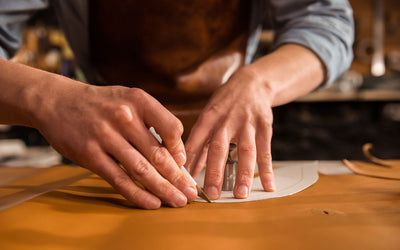
An interchangeable system is only as good as the workmanship behind it. The buckle should attach securely and release cleanly, without weakening the leather at its fastening point. The strap should be properly cut, edged and finished so it keeps its line through regular wear. These details are easy to overlook at first, but they are what separate an accessory bought for a season from one that becomes part of a personal uniform.
Handmade in England, Clara Perri belts are designed around this principle of enduring use. Skilled artisans work with selected Italian leathers and distinctive hardware to create straps and buckles that can be worn separately or combined to suit the wearer. The result is personalisation with substance, not a passing customisation trend.
Leather also rewards care. Rotate straps rather than wearing the same one every day, keep them away from prolonged moisture and avoid folding them sharply in storage. Nubuck and suede benefit from a gentle brush to restore the surface, while smooth leather should be cleaned with a soft, dry cloth before any suitable leather treatment is applied. Metal buckles can be lightly polished, but plated and aged finishes should be handled with care to preserve their intended character.
Choosing for versatility without choosing blandly
The common mistake is to interpret versatility as invisibility. In reality, the most useful interchangeable buckle belts have a clear point of view. That may be the softness of a hand-finished vintage calf strap, the architectural line of a contemporary buckle or the restrained sparkle of crystal against matte leather.
Choose one component for ease, another for distinction and a strap whose quality you will enjoy handling every time you dress. A belt is among the few accessories that becomes more individual with use. Let the marks, patina and changing combinations tell the story of a wardrobe worn well.
Leave a comment