

Why Solid Brass Belt Buckles Are Worth Choosing
A buckle is the point at which a belt becomes more than a useful finishing piece. It catches the light at the waist, gives structure to the silhouette and, with the right material, develops a character entirely its own. Solid brass belt buckles have a reassuring presence that lighter, plated alternatives rarely match: substantial in the hand, warm in tone and made to be worn often.
For a wardrobe built around fine leather, thoughtful tailoring and pieces chosen to last, brass offers a particular kind of luxury. It does not rely on a high-shine surface to make an impression. Instead, it gains distinction through weight, finish and the gentle evolution of its patina.
What makes solid brass belt buckles different?
Solid brass is an alloy of copper and zinc, valued in fine hardware for its strength, workability and naturally golden warmth. A solid brass buckle is formed from brass throughout, rather than being made from a base metal with a thin brass-coloured coating. That difference matters where a buckle is handled every day, repeatedly opened, closed and adjusted.
Plated hardware can be beautiful, particularly when a precise bright finish is desired. Yet its surface depends on the integrity of the plating beneath daily wear. Solid brass has no coloured layer to wear through. Small marks, softened edges and changes in tone become part of the metal itself, rather than exposing another material underneath.
The result is a buckle with depth. It feels considered against full-grain leather, Italian nubuck and richly textured suede because the material has visual substance of its own. Its colour sits comfortably alongside black, chocolate, tan, navy and cream, while bringing an especially handsome contrast to deep burgundy or hair-on cowhide.
The appeal of brass patina
Fresh brass can have a clear, golden glow. With wear, the surface may deepen and mellow, picking up subtle variations shaped by handling, air and time. This is known as patina, and it is one reason brass is so admired in heritage accessories.
Patina is not a flaw. On a well-made belt, it can make the buckle feel increasingly personal - a quiet record of regular wear rather than a sign that the piece has passed its best. The effect is particularly suited to casual belts, equestrian-inspired styles and vintage calf leather, where texture and character are central to the design.
That said, preference matters. Some clients enjoy the richer, aged appearance that develops naturally; others prefer the cleaner brightness of newly polished brass. Both are possible. A soft polishing cloth can restore lustre when required, while leaving the buckle untouched allows its finish to become more individual over time.
Polished, aged and plated finishes
Not every brass buckle is intended to look identical. A polished solid brass finish lends clarity to a classic leather belt and works beautifully with refined tailoring. It offers warmth without the coolness of silver-tone hardware, making it a natural choice with camel, tobacco and dark brown leather.
An aged brass finish has a softer, more established appearance from the outset. It is well suited to relaxed denim, country dressing and wider belts worn over knitwear or dresses. Its muted surface is forgiving of everyday contact and has the ease of a piece that already belongs to your wardrobe.
Silver-plated and aged-metal buckles remain excellent alternatives where the outfit calls for cooler tones or a darker, more contemporary line. The decision is not simply about durability. It is about balance: the metal should complement the leather, jewellery and purpose of the belt.
Choosing the right buckle shape
The most beautiful material still needs the right proportion. A narrow buckle can sharpen the line of a slim trouser belt, while a more generous frame gives presence to a wide waist belt. Solid brass is naturally weightier than many fashion metals, so scale should be chosen with the strap and wearing occasion in mind.
For tailored trousers and smart denim, a clean rectangular or gently rounded frame is often the most versatile choice. It feels composed without becoming overly formal. On a classic black or dark brown leather strap, the brass introduces warmth and makes even a simple outfit feel finished.
A sculptural oval or curved buckle brings a softer note to dresses, skirts and high-waisted silhouettes. The rounded shape can echo the body more naturally, particularly when worn at the waist rather than through belt loops. For equestrian-inspired dressing, a substantial D-ring or heritage frame buckle offers confident detail without needing ornament.
The width of the strap is equally important. A fine strap paired with a large, heavy buckle can look unbalanced and may not sit as comfortably as intended. Conversely, a broad leather belt benefits from hardware with enough scale to hold the design together. In an interchangeable system, matching buckle and strap width is essential for a secure, polished fit.
A material that rewards interchangeable styling
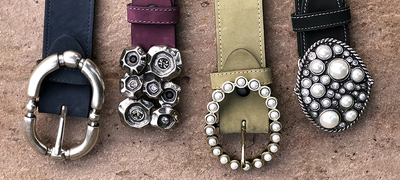
An interchangeable buckle turns one exceptional leather strap into several distinct looks. A black full-grain strap may feel formal with a sleek silver-plated buckle, then take on a warmer, more relaxed character with solid brass. The leather remains the foundation, but the hardware changes the mood.
This is where a considered buckle collection becomes genuinely useful rather than excessive. Choose a brass buckle for everyday warmth, a brighter finish for occasion dressing and perhaps a crystal or sculptural design when a belt is intended to be the focal point. The result is a wardrobe that offers variety without accumulating disposable accessories.
At Clara Perri, the opportunity to pair handmade English leatherwork with detachable buckles makes this kind of personal styling especially rewarding. A belt can evolve with the season, the occasion or simply the way you wish to dress that morning.
How to care for solid brass hardware
Solid brass is durable, but it deserves the same thoughtful care as fine leather. Wipe the buckle with a soft, dry cloth after wear if it has been exposed to moisture, fragrance or cosmetics. Store the belt flat or gently rolled, away from sustained humidity, and avoid placing it against abrasive jewellery or loose metal hardware.
If you prefer a brighter surface, use a suitable brass polish sparingly and follow its instructions carefully. Apply it to the metal only, keeping it away from leather, suede and nubuck. For belts with a deliberately aged finish, a dry cloth is usually enough; polishing may remove some of the depth that gives the buckle its intended character.
Avoid harsh household cleaners and prolonged contact with water. Brass is resilient, not invulnerable, and the most attractive patina develops through ordinary wear rather than neglect. A buckle that is looked after will retain its structure and acquire a finish that feels natural rather than forced.
When brass is the best choice
Solid brass is especially compelling when you want a belt to carry visual weight without excessive decoration. It works across women’s and men’s wardrobes, from a slim leather belt at the office to a wider style over a wool dress, and from weekend denim to considered travel dressing.
It may be less suitable if you strongly prefer an icy, mirror-bright metal tone, or if every piece of jewellery you wear is silver. Even then, mixed metals can look intentional when the leather and overall palette are restrained. The better question is whether brass reflects the atmosphere you want the accessory to create: warm, grounded, tactile and quietly assured.
A well-chosen buckle should never feel like an afterthought. In solid brass, it becomes a lasting detail with enough presence to define the belt, and enough restraint to let exceptional leather speak for itself.
Leave a comment