

Why Luxury Handmade Belts Are Worth Choosing
A belt is often the final decision in an otherwise considered outfit. It defines the waist of a silk dress, gives tailored trousers their finished line, or brings structure to relaxed denim and cashmere. Luxury handmade belts earn their place in a discerning wardrobe because they do more than hold a silhouette together: they introduce material, proportion and personality in one precise detail.
For those who buy fewer, better accessories, the distinction lies in what can be felt and seen over time. The weight of solid brass, the depth of Italian nubuck, the clean edge of carefully cut full-grain leather and the confidence of a buckle that sits exactly as it should all separate a lasting belt from an incidental one.
What Defines Luxury Handmade Belts?
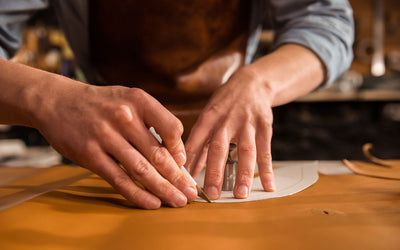
The word luxury is used freely in accessories, but genuine quality begins with construction and material selection. A handmade leather belt is shaped, cut, finished and assembled by skilled artisans rather than treated as a high-volume fashion component. Each stage affects how the belt wears, from the strength of the leather fibres to the finish along its edges and the placement of the holes.
Leather quality matters first. Full-grain leather retains the natural surface of the hide, giving it character, strength and the capacity to develop a rich patina. Vintage calf offers a softer, more lived-in appearance, while Italian nubuck has a refined, velvety hand that works beautifully with tailoring, knitwear and occasion dressing. Suede offers relaxed texture, and hair-on cowhide brings a distinctive focal point to simpler looks.
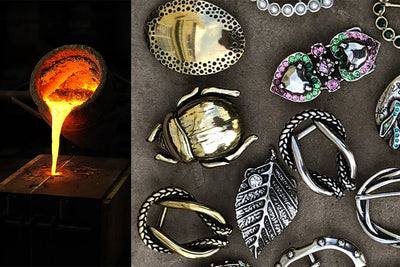
Hardware is equally consequential. A lightweight plated buckle can make even attractive leather feel temporary. Solid brass has reassuring substance and can be polished, aged or finished to complement the belt’s character. Silver-plated and aged-metal buckles each offer a different mood: one crisp and polished, the other quietly timeworn. Crystal embellishment, when thoughtfully placed, brings light to an evening belt without overwhelming the garment it accompanies.
The Difference Craftsmanship Makes
Machine production can create consistency, but it rarely offers the same judgement as an experienced leatherworker. An artisan understands how a particular hide will behave, where to cut for the best grain, and how much finishing is required to produce a clean, durable edge without disguising the material itself.
This attention is particularly visible after repeated wear. A well-made belt should retain its shape rather than curling or cracking at the fastening point. Its holes should remain neat, its keeper secure, and its buckle attachment dependable. Natural leather will soften and develop markings over the years, especially full-grain and vintage finishes. That is not a flaw. It is evidence of use, and one reason a finely made belt becomes more personal with age.
Handmade in England carries a particular significance where leatherworking heritage is concerned. At Clara Perri, belts are made in an English workshop by artisans who treat each strap and buckle as part of a considered accessory, not a disposable add-on. This approach allows for careful finishing as well as a more individual choice of leather, width, hardware and proportion.
Why Interchangeable Buckles Change the Value Equation
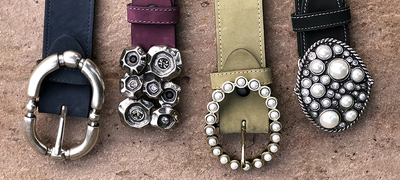
A luxury belt need not be confined to one look. An interchangeable buckle system allows one beautifully made leather strap to take on different roles in a wardrobe. A polished silver-plated buckle can sharpen a classic black belt for work or evening, while an aged brass buckle on the same strap may feel more relaxed with denim, boots or a waxed jacket.
The benefit is not simply variety. It is a more thoughtful way to buy accessories. Rather than accumulating several near-identical belts, it becomes possible to choose exceptional straps and refresh their character through detachable hardware. A wardrobe can be edited by colour, texture and occasion without compromising on quality.
This modular approach is especially useful for travel. A neutral leather strap paired with two or three buckles can cover a surprising range of dressing, from daytime tailoring to dinner reservations. It also makes personalisation more meaningful. The wearer can choose a broad contemporary buckle, a classic frame, an equestrian-inspired design or a crystal detail according to their own style rather than accepting a fixed combination.
Choosing the Right Leather and Width
The best belt is not necessarily the most decorative one. It depends on where and how it will be worn. A narrow belt has an elegant, precise effect through trouser loops and at the waist of a dress. Wider styles create more presence and are especially effective over knitwear, coats and fluid dresses where the waist needs definition.
For a first investment piece, black or deep brown full-grain leather offers lasting versatility. Black is naturally at home with monochrome tailoring, sharp suiting and evening dressing. Brown, tobacco and cognac tones bring warmth to denim, cream trousers, country-inspired layers and softer neutrals. Navy can be an understated alternative for those who prefer a cooler palette.
Texture changes the effect. Italian nubuck feels refined and tactile, particularly with wool, cashmere and matte fabrics. Suede is relaxed but still polished when the colour is rich and the buckle is well chosen. Hair-on cowhide works best as a statement: let it be the contrast against uncomplicated fabrics and clean silhouettes. It may not be the most versatile first belt, but it can be the piece that makes familiar clothing feel newly considered.
Matching the Belt to the Silhouette
A belt should work with the proportions of the clothing, rather than compete with them. High-waisted trousers often suit a medium-width strap with a clear, tailored buckle. Drop-waist dresses may call for a softer line and a slightly more decorative finish. A wide waist belt can transform a simple black dress or oversized blazer, but it requires confidence in placement: too high can shorten the torso, while too low can interrupt the garment’s natural shape.
Equestrian styles are particularly versatile because their hardware has purpose and restraint. They pair easily with riding boots and denim, of course, but they also bring a subtle heritage note to a pleated skirt, a wool coat or a sharply cut trouser. Crystal belts deserve a more selective approach. They are most effective when they catch the light against plain silk, velvet, crepe or fine knitwear, rather than competing with busy prints.
Bespoke Details Are More Than Decoration
Bespoke design is often understood as choosing a colour. In a truly considered belt, it goes further. The leather can be selected for its finish and feel, the buckle for its scale and metal tone, and the width for the garments it will accompany. These decisions determine whether the belt becomes a frequent essential or remains an occasional novelty.
There are useful trade-offs to consider. A highly embellished buckle offers occasion impact but may be less suited to everyday wear. Very pale leather can look exceptional in summer and with light tailoring, though it will require more attentive care. A statement-wide belt has visual authority, but a medium-width style will usually work across more outfits. The strongest collection balances a dependable classic strap with one or two more expressive combinations.
A Design Your Own Belt experience is valuable precisely because it makes those choices deliberate. It invites the wearer to consider the clothes already owned, the metals worn most often, and the occasions a belt needs to serve. That is a more enduring starting point than following a passing colour or logo trend.
Caring for a Belt Made to Last
Quality leather responds well to simple, regular care. Store belts loosely coiled or hung straight, away from direct sunlight and persistent heat. Avoid fastening a belt at the tightest hole when it is not being worn, as this can create unnecessary stress at the leather and buckle.
For smooth leather, a soft dry cloth removes everyday dust. Use a suitable leather treatment sparingly and test it first on an inconspicuous area, particularly with richly coloured finishes. Nubuck and suede require a gentler approach, usually a dedicated brush rather than creams or oils that may alter their texture. Crystal hardware should be wiped with a soft cloth, while brass and silver-plated finishes benefit from handling that avoids unnecessary abrasion.
The right belt will never be merely an afterthought. Choose one for the feel of the leather, the balance of the buckle and the way it supports the clothes you already love, then allow it to become part of the wardrobe’s own story.
Leave a comment