

Belt Customisation Examples for a Personal Wardrobe
A belt is often the smallest element of an outfit, yet it sits at its visual centre. The most considered belt customisation examples do not rely on novelty. They use proportion, leather, hardware and finish to create a piece that feels entirely at home in its owner’s wardrobe - whether it is worn with sharply tailored trousers, relaxed denim or an evening dress.
For a luxury belt, personalisation is not simply a choice of colour. It is the opportunity to decide how a belt should work, where it will sit, and what character it brings to the clothes around it. A detachable buckle adds another layer of freedom: one beautifully made leather strap can take on a different presence with a change of hardware.
Why a customised belt earns its place
A well-made belt should improve with regular wear, rather than become disposable after a season. Full Grain leather develops a personal patina; Italian Nubuck offers a softer, more tactile finish; suede introduces depth without competing with the rest of an outfit. Selecting the right material is therefore as practical as it is aesthetic.
Customisation also prevents the familiar problem of owning several belts that serve almost the same purpose. A considered system of interchangeable straps and buckles can cover work, weekends, travelling and formal occasions without filling a drawer with near-duplicates. It does, however, depend on choosing a coherent starting point. A very decorative crystal buckle may be exquisite for evening wear, but it will not replace a restrained solid brass design for everyday tailoring.
The most successful choices begin with the clothing you wear most often. Look at the colours of your shoes, handbags, coats and jewellery. Then consider silhouette. A narrow belt can define the waist of a silk dress, while a wider leather belt has enough visual weight to anchor knitwear or a longline jacket.
Belt customisation examples for different wardrobes
The polished everyday belt
For an everyday belt with enduring versatility, begin with a slim or medium-width strap in black, dark brown or rich tan Full Grain leather. Pair it with a simple polished silver-plated buckle if your watch and jewellery tend towards cooler metals, or choose solid brass for warmth against camel, cream, navy and earthy tones.
This is the most useful first custom belt because it works without demanding attention. It can finish a pair of tailored trousers for the office, bring structure to dark denim at the weekend, and sit neatly at the waist of a shirt dress. The choice between black and brown is not a question of formality alone. Black feels crisp and graphic, particularly with monochrome dressing; dark brown has a softer, more relaxed character and works beautifully with textured wool and tweed.
Italian Nubuck with aged-metal hardware
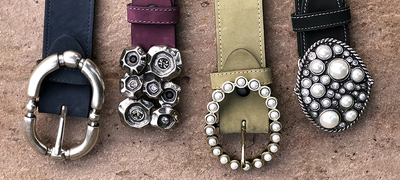
Italian Nubuck creates a different kind of luxury. Its brushed surface absorbs colour with a muted richness that suits olive, tobacco, navy, burgundy and stone. Rather than adding a highly polished buckle, an aged-metal finish gives the belt a lived-in elegance and allows the texture of the leather to remain central.
This combination is particularly effective for country-inspired tailoring, cashmere, corduroy and off-duty layers. It also offers a refined route into equestrian style without looking costume-like. A restrained buckle with clean edges will keep the effect sophisticated, especially when worn with riding boots, a wool coat or a crisp white shirt.
There is a practical consideration with Nubuck: its soft finish rewards a little care. It is best reserved for lower-contact occasions than a belt worn daily against rough denim hardware or exposed to wet weather. For those who love the colour and hand-feel of Nubuck, keeping a more hard-wearing calf leather strap as an alternative is a sensible balance.
A wide waist belt for dresses and knitwear
A wide belt changes the architecture of an outfit. On a fluid midi dress, it can create a defined waist and add intention to an otherwise simple silhouette. Over a fine-gauge knit or a tailored blazer, it offers a confident focal point that jewellery alone cannot provide.
A wide strap in smooth vintage calf leather feels especially elegant in deep espresso, black or warm cognac. Choose a buckle that complements the scale of the belt rather than disappearing into it. A shaped aged-metal buckle brings artisanal character, while a polished silver-plated style gives a cleaner, more contemporary result.
Fit matters here. A waist belt is not worn in the same place as a belt threaded through trouser loops, so measurements should reflect the point where you intend to wear it. If you favour dresses over trousers, or regularly style belts over coats, a bespoke length can make the difference between a belt that merely fits and one that sits perfectly.
Hair-on cowhide as a statement accent
Hair-on cowhide has a distinctive surface that needs little embellishment. In a natural animal print or a richly coloured finish, it can give a plain black dress, denim shirt or neutral knit immediate presence. The key is restraint elsewhere: let the texture do the work.
A narrower strap with a minimal buckle keeps hair-on cowhide wearable during the day. For evening, a more sculptural buckle can make it feel deliberate and dressed rather than casual. This is a fine example of where interchangeable buckles are valuable. The same statement strap can move from relaxed daywear to dinner with one considered alteration.
Because this leather is inherently individual, variations in pattern and texture are part of its appeal. It is a choice for someone who wants their accessories to feel selected, not replicated.
Crystal buckle, quiet leather
Crystal detailing is most effective when paired with a leather strap of calm, impeccable quality. A black suede, deep navy Full Grain leather or smooth ivory strap provides a discreet backdrop for a crystal buckle, allowing the light-catching detail to feel couture-led rather than excessive.
This combination works especially well with evening tailoring, a dinner dress or a simple black jumpsuit. It can also transform a pared-back daytime outfit for an event without requiring a complete change of accessories. If the buckle is the feature, avoid competing textures such as heavily grained leather or prominent contrast stitching.
For a more versatile approach, retain the same strap and add a classic metal buckle for the day. The shift is small, but the result is entirely different: one belt becomes both a useful wardrobe foundation and a finishing piece for special occasions.
Drop-waist styling with a longer strap
Not every belt is intended to define the natural waist. A drop-waist belt sits lower on the hips, introducing a softer, more relaxed line to long shirts, tunics, slip dresses and oversized blazers. The look is less structured, which makes material especially important. Supple suede or softly finished vintage calf leather will drape more naturally than a very rigid strap.
A slim, elongated buckle is often the best partner here. It should follow the line of the body rather than interrupt it. This style rewards experimentation with length, particularly if you plan to wear the belt over layers. A longer bespoke strap offers flexibility without the untidy excess of a belt that has simply been bought too large.
Choosing components that work together
A modular belt wardrobe need not be extensive. Two or three straps in distinct materials, paired with several buckle finishes, can create a great number of purposeful combinations. The most useful contrast is usually between a smooth, formal leather; a textured or soft-finish alternative; and one statement strap for occasions when the belt is intended to be noticed.
Keep metal tones in mind, but do not treat them as rules. A silver-plated buckle against warm brown leather can look wonderfully modern, while solid brass on black creates a strong, classic contrast. What matters is repetition elsewhere in the outfit: a buckle that relates to a watch case, earrings, bag clasp or shoe detail will feel intentional.
At Clara Perri, the Design Your Own Belt approach makes this considered dressing possible without sacrificing craftsmanship. Handmade in England by skilled artisans, each choice can be guided by the leather’s character, the buckle’s finish and the life the belt will lead.
Choose the strap that feels right in the hand, then select the buckle that gives it purpose. A personalised belt becomes most valuable when it is not saved for an occasion, but worn often enough to become recognisably yours.
Leave a comment