

How to Match Belt Hardware With Your Wardrobe
A belt buckle is a small detail with unusual authority. It sits at the centre of the silhouette, catches the light as you move, and can make an otherwise considered outfit feel either beautifully resolved or slightly disconnected. Knowing how to match belt hardware gives this essential accessory its proper place: not simply as a fastening, but as a deliberate part of your wardrobe.
The old rule of matching every metal exactly is useful, but too strict for a modern wardrobe. The more refined approach is to create a clear visual relationship between the buckle, the leather, the occasion and the accessories already in view. A solid brass buckle on rich chestnut full-grain leather tells a different story from a sleek silver-plated frame on black Italian nubuck. Both can be right. The question is whether the finish supports the character of what you are wearing.
Start with the mood of the belt hardware
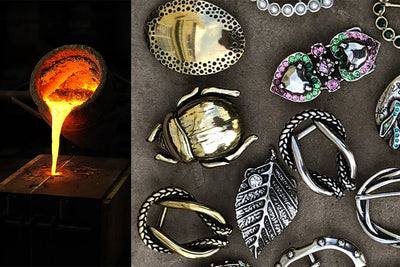
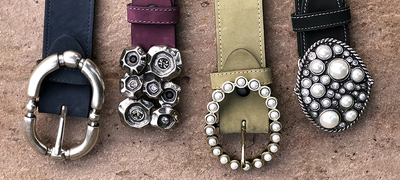
Before matching a buckle to jewellery or shoes, consider what the hardware itself communicates. Polished metal is crisp and light-catching. It has a natural affinity with tailored trousers, clean shirting and evening looks where the outfit benefits from precision. Silver-plated or bright nickel-style finishes often feel contemporary, particularly against black, navy, charcoal and cool-toned leather.
Warm metals have more depth. Solid brass, antique gold and aged finishes bring a gentler richness to vintage calf, tan leather, suede and equestrian-inspired styles. They are especially effective when a belt is intended to look collected rather than newly uniform. A softly burnished buckle can give denim, corduroy or a relaxed wool trouser an ease that highly polished hardware may not.
Then there is decorative hardware. Crystal-set buckles are designed to be noticed, so let them occupy that role. They can lift an otherwise restrained black dress, define a silk blouse and wide-leg trouser, or add a point of light to an evening coat. With a crystal buckle, the belt is jewellery as much as an accessory. Keep other focal points measured, rather than competing for attention.
How to match belt hardware to jewellery
Matching belt hardware to jewellery remains the most reliable starting point, especially when your belt is worn visibly at the waist. If you wear yellow-gold earrings, a watch with a warm-toned case or a gold ring stack, brass or antique gold hardware will make the whole look feel intentional. Likewise, silver jewellery tends to sit naturally with silver-plated, chrome-like and pewter-toned buckles.
Exact matching is not necessary. A brushed silver buckle and polished sterling earrings can work together because they share the same cool family, even though their surface treatments differ. The same is true of brass with a softly matte gold bangle. Aim for harmony of temperature first, then consider shine.
Mixed metals need a little more judgement, not avoidance. They are most convincing when one finish leads and the other appears as a quiet accent. For example, a silver buckle can work with a gold watch if the watch includes a steel bracelet, silver face details or a restrained two-tone design. What looks less assured is a collection of unrelated metals with no repeated note. If the buckle is bold or oversized, give it clearer precedence and keep jewellery more discreet.
Hardware does not need to follow jewellery rigidly when the belt is part of a more rugged look. A weathered brass buckle worn with indigo denim and brown boots can be stronger than a polished silver option, even if you happen to wear silver rings. In this setting, the leather and footwear are setting the tone.
Let the leather and buckle work as one
The buckle should never be chosen in isolation from the strap. Leather has colour, texture and a degree of formality, all of which influence the most convincing metal finish.
Black full-grain leather is exceptionally versatile. Polished silver hardware creates sharp contrast and a modern line, well suited to tailoring, black denim and monochrome dressing. Gold-toned hardware on black leather offers more drama and works particularly well for eveningwear, a statement waist belt or a structured dress. The choice depends on whether you want the buckle to recede into a sleek look or become its central detail.
Brown leather has greater variation, from pale tan to dark espresso. Brighter brass and antique gold tend to bring out its warm undertones, while aged metal complements leather with a naturally distressed or heritage finish. Silver can still look excellent with deep chocolate leather, particularly where the buckle has a sculptural contemporary shape. With lighter tan, however, cool polished hardware can sometimes feel abrupt. A softer, warmer finish is usually the more natural choice.
Italian nubuck and suede absorb light rather than reflecting it, which makes them especially handsome with brushed, aged or satin-finished buckles. A mirror-bright buckle is not forbidden, but it creates a stronger contrast and turns the belt into a more formal statement. Hair-on cowhide has its own visual texture, so choose uncomplicated hardware that allows the material to remain the point of interest.
Match the finish to the occasion
A well-chosen belt can move between work, weekend and evening, but the hardware should acknowledge where you are going. For formal business dressing, a clean, proportionate buckle in polished silver, restrained brass or a refined aged finish usually has the greatest longevity. Avoid hardware so large that it interrupts the line of a tailored jacket or becomes the first thing visible when seated at a table.
For relaxed dressing, scale and texture can do more. An equestrian-inspired buckle, aged brass finish or a slightly broader leather strap feels at home with knitwear, denim, country tailoring and flat boots. These combinations benefit from character. A buckle with a little weight and patina looks purposeful rather than overly formal.
Evening dressing permits contrast. A slim black belt with a crystal buckle can give shape to a fluid dress without adding bulk. A broad waist belt with sculptural metal hardware can transform a minimal jumpsuit or a sharply cut blazer. In both cases, make a decision: either repeat the metal in your jewellery or allow the buckle to be the singular bright element. Trying to introduce several separate statements can dilute the effect.
Consider the scale, not only the colour
Hardware matching is also about proportion. A delicate buckle can disappear on a wide belt, while an oversized plaque may overwhelm a narrow strap or a petite frame. The width of the belt, the weight of the leather and the scale of your clothing should feel balanced.
A narrow belt with a refined frame buckle is ideal when it is threaded through tailored loops or used to define a dress at the natural waist. Wider leather invites more substantial hardware, particularly over coats, knitwear and fluid dresses where the belt needs enough presence to hold the silhouette. For drop-waist styles, a flatter buckle often sits more comfortably and maintains an easy, elongated line.
This is where contrast can be especially useful. A simple buckle on richly textured leather keeps the look controlled. Conversely, a beautifully detailed buckle shines brightest against plain, finely finished leather. If both strap and hardware are elaborate, the belt may feel busy before it has even met the rest of the outfit.
Build versatility with interchangeable buckles
An interchangeable belt system makes it possible to choose hardware with the same care as cufflinks or earrings, without buying an entirely new belt for every outfit. One black leather strap can become tailored and understated with a polished silver buckle, warmer and more expressive with solid brass, or evening-ready with crystal embellishment. A tan or vintage calf strap can shift from weekend casual to polished lunch dressing with a change of finish alone.
This flexibility is particularly valuable when travelling or building a smaller, better wardrobe. Rather than accumulating belts that serve one narrow purpose, select a few exceptional straps in the leather colours you wear most, then vary the buckle according to occasion and accessories. Clara Perri belts are handmade in England with this personal approach in mind, allowing leather, hardware and proportion to be chosen as a considered whole.
When selecting an additional buckle, look at the wardrobe you already reach for. If your jewellery is largely yellow gold and your footwear favours brown leather, a warm brass or antique finish will earn its place quickly. If your day-to-day uniform is black, navy and silver jewellery, a refined silver-plated buckle may be the more useful investment. A crystal style is often the finishing piece for those occasions when you want the belt to lead.
A final check before you leave
Stand back far enough to see the outfit as a composition, not a collection of individual purchases. The buckle should relate to at least one other element - jewellery, shoe hardware, a watch, handbag fitting or the warmth of the leather itself. It does not need to mimic everything in sight.
The most elegant choices usually look effortless because they have been edited. Choose hardware with enough distinction to honour the quality of the leather, then let it add a quiet, personal signature to what you wear.
Leave a comment