

How to Measure Belt Size for a Perfect Fit
A beautifully made leather belt should fasten with ease, sit in the right place, and leave enough length beyond the buckle to look considered rather than accidental. Knowing how to measure belt size takes the uncertainty out of choosing a new piece, whether you favour a slim Italian Nubuck belt for tailoring, a wide waist belt over knitwear, or a classic Full Grain style for everyday wear.
The most reliable measurement is not always the number on your trousers. Belt sizing is shaped by where the belt will be worn, the thickness of what sits beneath it, and the silhouette you want to create. A belt worn at the natural waist needs different consideration from one styled low on the hips.
How to measure belt size using a belt you already own
If you own a belt that fits exactly as you like, this is the clearest way to establish your size. Lay it flat on a clean, level surface without pulling or stretching the leather. Use a tape measure to measure from the point where the buckle’s prong meets the leather to the hole you use most often.
That measurement, in inches or centimetres, is your working belt size. Do not measure to the very end of the buckle, and do not measure the full length of the strap. The useful measurement is the distance from the buckle attachment point to your preferred fastening hole.
For example, if your preferred hole measures 34 inches from the buckle attachment, a 34-inch belt is usually the appropriate starting point. A well-proportioned belt is generally worn using the centre hole, which gives room to adjust slightly after a meal, over a different fabric, or between seasons.
This method is particularly helpful when replacing an existing leather strap while retaining a detachable buckle. Interchangeable designs make it possible to refresh a favourite accessory in a new colour, texture, or finish, but the replacement strap should still be sized to the hole where you wear your current belt most comfortably.
Check which hole you use
Look at the wear pattern on your existing belt before measuring. The hole with the most natural shaping is often the one you use most. If you alternate between two holes, measure to the midpoint where possible, or choose the larger measurement if you expect to wear the belt over thicker layers.
Leather develops character with use, especially supple suede, vintage calf, and nubuck. It may soften over time, but it should never be purchased so tight that you are relying on significant stretch for comfort.
Measure your body when you do not have a reference belt
Without a belt to copy, measure the place where you plan to wear the new one. Put on the trousers, skirt, dress, or layers you expect to style with it. Then pass a flexible tape measure around your body, keeping it level and comfortably close rather than pulled tight.
Take the measurement at the natural waist for a waist belt, usually the narrowest part of the torso. For jeans and trousers, measure through the belt loops at the level where the waistband sits. For a drop-waist or hip belt, measure around the fuller part of the hips where the belt will rest.
Write down the measurement and compare it with the belt’s stated sizing guidance. Measurements should be taken over the garments you intend to wear. A belt over a silk dress may require a different size from the same belt worn through denim loops or over a structured wool blazer.
If you are between sizes, the right choice depends on styling. Choose the smaller option for a fine belt intended for a bare waist or lightweight dress, provided its centre hole aligns closely with your measurement. Choose the larger option for substantial leather, wide silhouettes, or outfits involving denim, knitwear, coats, and layered tailoring. The aim is to fasten comfortably near the middle of the hole range, not at the first or final hole.
Belt size is not the same as trouser size
A trouser size can offer a useful indication, but it is not a precise belt measurement. Different clothing brands position waistbands differently, use varying amounts of ease, and may label the same physical measurement in different ways. A 32-inch trouser, for instance, does not automatically mean a 32-inch belt will fit through its loops in the way you want.
This is why measuring a worn-in favourite belt or your dressed body is more dependable. It accounts for the reality of how you dress rather than relying on a label. It also avoids a common mistake: ordering a belt by its overall strap length. The total length includes the tail beyond the fastening holes and is not the size used to determine fit.
Understanding inches and centimetres
Luxury belt collections may show sizes in inches, centimetres, or both. One inch equals 2.54 centimetres, so a 34-inch measurement is approximately 86 centimetres. When converting, use the actual measured figure rather than rounding based on trouser size.
A small variation is normal, as handmade leatherwork has subtle material character and belts are designed with multiple fastening holes for adjustment. However, a difference of several inches can affect both comfort and the visual balance of the belt tail.
Consider the belt style before choosing a size
The intended silhouette should guide your final choice. A narrow belt worn through tailored trousers has a different proportion from a statement piece designed to define the waist. Neither should be fitted by guesswork.
A classic or casual belt usually looks best when the tongue fastens at the centre hole, leaving a neat tail that reaches the first belt loop. With a wide belt, the leather’s depth and the structure of the buckle can make a close fit feel firmer than a narrow strap. Measure over the exact garments, especially when the belt is intended for dresses, coats, or heavier fabrics.
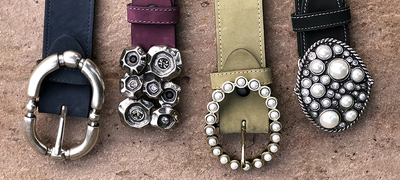
Equestrian-inspired belts and styles with solid brass or aged-metal buckles can have more visual weight. Allowing a little adjustment either side of your usual fastening point gives these pieces greater versatility across riding-inspired denim, boots, tailoring, and knitwear.
Crystal buckles deserve the same practical attention. Their decorative presence may be the focal point of an outfit, but the fit should remain discreetly comfortable. A belt that sits at the correct position allows the buckle to remain centred rather than pulling to one side.
Measure carefully with interchangeable buckles
With a modular belt system, the buckle and leather strap are designed to work together, yet their construction must be considered when measuring. Always measure from the buckle attachment point, not from the buckle’s outermost edge. This ensures the measurement reflects where the leather begins and where the strap actually fastens.
If you are choosing a standalone strap for a buckle you already own, check that the strap width and fastening mechanism are compatible as well as the size. A beautiful buckle should sit securely and proportionately on the leather. A narrow strap may suit a refined silver-plated buckle, while a wider Full Grain leather strap may better complement a substantial solid brass fitting.
For a bespoke order, provide the measurement from buckle attachment to your preferred hole, specify whether you wear the belt at the waist, through trouser loops, or on the hips, and mention the garments you have in mind. These details allow an artisan to create a fit that feels intentional from the first wear.
A final fitting check before you order
Before selecting your size, return to the number you measured and ask one practical question: where will this belt live in your wardrobe? If it will move between dresses, trousers, and outerwear, prioritise a centre-hole fit with room to adjust. If it is being chosen for one particular occasion or silhouette, measure over that exact outfit.
At Clara Perri, every handmade leather belt is intended to become more personal with wear. Choosing the right size gives the leather, buckle, and silhouette the space to do their work beautifully - a small act of precision that makes an enduring accessory feel unmistakably your own.
Leave a comment