

Belt Repair Guide for Fine Leather and Buckles
A well-made belt earns its character gradually: a softer bend at the waist, a gentle burnish around the buckle holes, a finish that becomes particular to its owner. This belt repair guide is intended for those moments when that character needs careful attention, rather than a hasty fix. Fine leather, solid brass and plated hardware can often be restored beautifully, provided the repair suits the material and the damage is assessed honestly.
The first principle is simple: do less, but do it well. A luxury belt is not improved by aggressive cleaning, household glues or improvised alterations. Some marks belong to a life well worn. Others, particularly a split strap, lifting edge or loose buckle fitting, deserve the hand of a leather specialist.
Start with a considered assessment
Lay the belt flat in good natural light and inspect both the grain side and underside. Note whether the concern is cosmetic, structural or mechanical. A light surface scuff on Italian nubuck calls for an entirely different response from a cracked full-grain strap or a buckle that no longer sits securely.
Cosmetic wear includes small scratches, dullness, minor colour transfer and light surface marks. Structural damage includes deep cracks, stretching at the holes, a torn keeper, separated layers or broken stitching. Mechanical faults concern the buckle, screws, press studs or the attachment point where buckle and strap meet. Separating these issues prevents a minor blemish becoming a permanent problem.
Before applying any product, test it on an unobtrusive area, such as the underside near the tip. This matters especially with suede, nubuck, hair-on cowhide and pale leathers, where moisture and oils may alter the finish or deepen the colour.
Know your leather before treating it
Full-grain and vintage calf leather have a natural surface that generally responds well to sparing conditioning. Their occasional creases and variations are part of the hide, not faults to erase. Use a soft, dry cloth first. If the leather feels dry after cleaning, apply a minute amount of quality neutral leather balm with a cloth, working it in lightly and allowing it to rest before buffing.
Italian nubuck and suede require a drier approach. Brush gently with a dedicated suede or nubuck brush to lift the nap and remove loose dust. Do not use conventional waxes, creams or heavy conditioners. They can flatten the velvety surface and leave darkened patches that cannot easily be reversed.
Hair-on cowhide should never be rubbed vigorously or soaked. Brush only in the direction of the hair with a clean, soft brush. If a mark remains, professional advice is preferable to repeated spot treatment, which can disturb the hair and the finish beneath it.
Belt repair guide: repairing common leather concerns
A shallow scuff on smooth leather can often be softened rather than concealed. Wipe away dust with a dry lint-free cloth, then warm the area very gently with the palm of your hand. A small amount of neutral balm may reduce the appearance of a pale scuff on darker leather. Avoid coloured polishes unless they have been professionally colour-matched. An inaccurate tone can settle into the grain and look more conspicuous than the original mark.
For a scratched or worn belt edge, do not reach for paint from a craft drawer. Edge finishing is a specialist process involving preparation, colour matching and flexible coatings. A temporary coating may crack as the belt bends, particularly near the buckle end and holes. If the edge is merely fuzzy, a leather craftsperson can usually refine it. If layers are separating, the belt needs structural attention before any cosmetic finishing.
Stretched buckle holes are a practical concern. Continued wear concentrates pressure on the weakened area, and adding a new hole beside it rarely solves the issue. It can make the strap look uneven and may create a point where the leather tears. A specialist can reinforce or rework the affected section where appropriate. With an interchangeable belt system, replacing the strap may be the more elegant choice, while retaining a treasured buckle.
Cracks demand restraint. Fine surface creasing is normal, particularly on a belt worn often with tailoring or denim. However, a crack that exposes the fibre layer, catches under a fingernail or widens when the belt is bent should be professionally repaired. Conditioners cannot rebuild broken fibres. In some cases, careful stabilisation can prolong the belt’s life; in others, replacement is the better investment.
Re-stitching, keepers and split layers
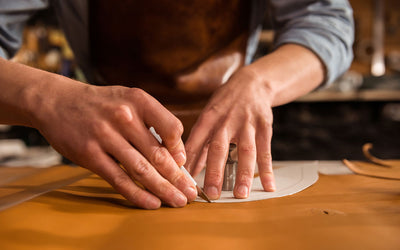
Loose stitching along a leather keeper or at the buckle fold is repairable when addressed early. Do not pull at the thread or trim it close to the leather, as this may allow a longer section to unravel. A leather repairer can re-stitch with suitably strong thread and spacing that respects the original construction.
A damaged keeper is also worth repairing. This modest loop controls the belt tail and contributes to the clean line of the finished piece. Where the keeper is torn, a replacement in a closely matched leather is often preferable to forcing the original back into shape.
If the leather is delaminating or the folded buckle end is opening, stop wearing the belt until it has been assessed. Adhesives bought for general household repairs can stiffen the leather, stain the surface and prevent a later professional restoration. Proper leather adhesives remain flexible and are applied with precision after the surfaces have been prepared.
Caring for buckles, screws and metal finishes
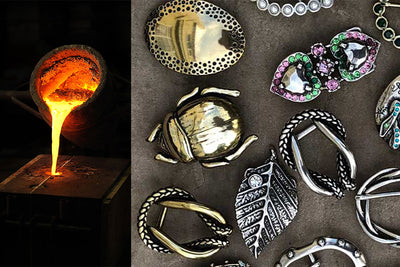
A buckle should be cleaned according to its finish, not simply polished until it shines. Solid brass develops a rich, mellow patina over time. Many owners value this depth of colour, particularly on equestrian and heritage-inspired designs. Wipe brass with a soft dry cloth after wear. If brighter polish is desired, use a metal product designed for brass sparingly and keep it away from the leather.
Silver-plated, aged-metal and crystal buckles need even greater care. Abrasive polishes can remove plating or alter an intentionally antiqued finish. For these pieces, a soft microfibre cloth is usually sufficient. Clean around crystals gently, never soaking the buckle or using ultrasonic cleaners, which may affect settings and adhesives.
If a buckle becomes loose, first establish how it is attached. Some designs use screws, while others use a fold-over leather fitting, rivets or a detachable mechanism. A screw may be carefully tightened with the correct small screwdriver, but do not overtighten it. If the screw turns without catching, is missing, or repeatedly loosens, it needs the right replacement component rather than a substitute from a hardware assortment.
With detachable buckles, remove the buckle before cleaning the strap whenever the construction allows. This protects both materials and gives you a clearer view of the attachment point. Keep buckles individually wrapped in soft cloth when not in use, particularly crystal or plated styles that could be scratched by harder metal pieces.
When repair is not the most considered option
There is a point at which repair can compromise the elegance, comfort or reliability of a belt. Deep cracking across a large area, extensive water damage, major distortion from incorrect storage and severe buckle corrosion may make restoration uneconomical or visually unsatisfactory. That does not diminish the years the belt has served.
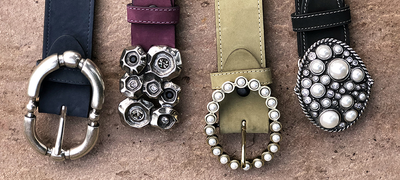
Modular belt design offers a more thoughtful alternative to discarding the entire piece. A well-loved buckle can take on a new presence with a fresh strap in full-grain leather, Italian nubuck or suede. Equally, a different buckle can refresh a strap that remains in excellent condition, changing the belt from understated daytime wear to a more distinctive evening detail. Clara Perri’s interchangeable approach is designed around this longevity: individual components allow personal style to evolve without treating a fine accessory as disposable.
Storage is the quietest form of repair
Many belt repairs are avoided through proper storage. Unfasten the belt after wear and either lay it flat in a drawer or hang it loosely from a broad hook. Do not leave it tightly coiled for long periods, especially if it is wide, heavily embellished or made from structured leather.
Keep belts away from radiators, direct sunlight and humid bathrooms. Heat dries leather and can weaken adhesives; humidity can encourage mould and tarnish metal. If a belt has been caught in rain, blot it gently and allow it to dry naturally at room temperature. Never use a hairdryer or place it on a radiator, as rapid heat can leave leather brittle and misshapen.
Rotate frequently worn belts where possible. Allowing a leather strap a day or two between wears lets it recover its shape, particularly around buckle holes and the curved section that sits at the waist.
A fine belt should not have to look new forever to look exceptional. Treat its materials with patience, seek specialist repair when the construction is affected, and allow a well-earned patina to tell its own refined story.
Leave a comment