

Guide to Adjustable Belt Systems for a Flexible Wardrobe
A beautifully made belt should do more than hold a look together. It should give a well-chosen wardrobe greater range. This guide to adjustable belt systems explains how detachable buckles and considered leather straps create an accessory that can change with the occasion, rather than being worn in only one way.
For those who invest in fine tailoring, denim, dresses and outerwear, this approach brings a welcome practicality to luxury. One buckle can lend a familiar leather strap a different character; one strap can move from a discreet daytime finish to a more decorative evening piece. The result is not excess, but a more personal and enduring way to dress.
What is an adjustable belt system?
An adjustable belt system is built from separate components: a leather strap and a detachable buckle designed to work together. Rather than purchasing a fixed belt in a single combination, you can select the leather, width, colour and finish independently from the hardware.
The word adjustable can refer to two useful qualities. First, the buckle can be changed, allowing the appearance of the belt to evolve. Second, the strap is worn through a series of holes or an adjustable fastening position, giving a precise fit at the waist, hips or over layers. The best systems make both feel considered rather than complicated.
This distinction matters. A belt with a removable buckle is not automatically a refined modular piece. The attachment must be secure, proportionate and finished with care, while the strap needs enough structure to sit cleanly without stiffness. In luxury leatherwork, the small details - the buckle fitting, edge finish, keeper and weight of the leather - determine whether a belt feels composed over time.
Why interchangeable buckles earn their place
A fixed belt has a clear purpose: it is a complete design, chosen for one particular mood. An interchangeable system offers a different kind of value. It allows a favourite strap to remain in regular use while the buckle changes to suit your clothing, setting or season.
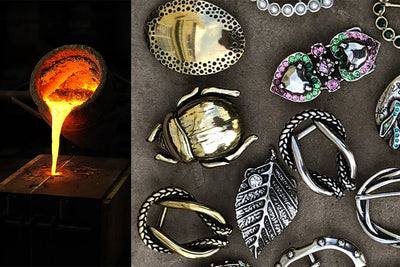
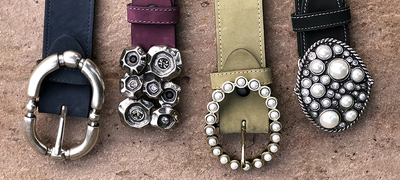
A polished silver-plated buckle can bring crisp definition to black full-grain leather and tailored trousers. A solid brass or aged-metal finish introduces warmth against tobacco, chocolate or vintage calf leather. Crystal hardware shifts the same essential accessory towards evening dressing, while an equestrian-inspired buckle can make a simple knit, white shirt and trousers feel deliberately styled.
There is also a practical advantage. Belts often show wear first at the leather, especially when worn with denim or heavier fabrics. With separate components, a treasured buckle need not be retired when it is time to refresh a strap. Equally, a pristine Italian nubuck strap can be given a quieter or more expressive finish depending on the hardware selected.
The trade-off is that a modular system invites choice. If every component is highly decorative, the wardrobe may feel less versatile, not more. Starting with a few purposeful pieces is usually more elegant than building a large collection without a clear point of view.
Choosing the right leather strap
The strap provides the line, texture and substance of the belt. It is the element that sits closest to the garment, so material and width should be chosen with how you actually dress in mind.
Full-grain leather for everyday definition
Full-grain leather is a natural starting point for a belt worn frequently. Its surface retains the character of the hide and develops a richer patina through use. In black, deep brown, navy or tan, it works particularly well with tailoring, denim and structured daywear.
Choose a narrower strap when the belt will pass through trouser loops or sit at the natural waist beneath a blazer. A wider version has more visual authority and suits dresses, longline jackets or knitwear, where it can shape the silhouette rather than simply finish it.
Italian nubuck and suede for softness
Italian nubuck and suede offer a quieter, more tactile alternative to smooth leather. Their soft nap adds depth to neutral dressing and pairs beautifully with wool, cashmere, brushed cotton and relaxed linen. They are especially effective when the aim is tonal dressing rather than sharp contrast.
These finishes do ask for care. They are less suited to wet weather or situations where a belt will meet frequent abrasion. That does not make them impractical, but it does make them better reserved for considered wear. A suede strap can be exceptionally versatile in a dry, polished wardrobe, provided it is stored carefully and brushed gently when needed.
Vintage calf and hair-on cowhide for character
Vintage calf leather has a lived-in richness that can temper formal clothing and deepen casual looks. It is well suited to aged metal hardware and equestrian styling, where a little texture is part of the appeal.
Hair-on cowhide is more directional. It can make a simple black dress, plain denim or a monochrome trouser suit feel distinctive, but it is rarely the strap to choose as an only belt. Treat it as a statement component and let the buckle remain restrained so that the materials do not compete.
Matching buckle scale to the outfit
A buckle is a piece of jewellery for the waist. Its finish matters, but its scale is often what determines whether a belt looks balanced.
For trouser loops, a compact or medium buckle is generally the most useful. It sits neatly beneath knitwear and jackets, and it will not overwhelm a slim strap. A wider strap can carry a more substantial buckle, particularly when worn over a dress, a coat or a flowing blouse. This is where sculptural forms, aged finishes and crystal detail can be most effective.
Consider the other metal details you wear, but do not feel bound to match everything exactly. A silver-plated buckle can sit confidently with a gold watch if both are worn with intention. What matters more is the overall temperature of the outfit: cool polished hardware tends to complement black, charcoal, navy and clear colours, while solid brass and antique finishes bring depth to camel, olive, cream and earthy tones.
Crystal buckles deserve a similarly measured approach. They are not only for formal occasions. Against a simple cashmere jumper and dark jeans, a crystal detail can feel modern and assured. With a heavily embellished dress, however, a clean buckle is often the more sophisticated choice.
Fit changes with where you wear the belt
A common mistake is to use one belt measurement for every outfit. The waist is not the same circumference as the high hip, and neither remains constant when a belt is worn over a blazer or a winter knit.
A belt worn through jeans or trousers should fasten comfortably around the middle holes, leaving a neat tail. This allows room for normal variation and gives the strap a more balanced appearance. For waist belts, measure where you intend to wear the piece rather than relying solely on dress size. A drop-waist style needs a longer fit than a belt intended for the narrowest part of the body.
If you expect to wear a strap both over dresses and through loops, choose the length for its primary purpose. A belt that is too long can look untidy when worn low; one that is too short will not sit gracefully over layers. Bespoke options are particularly valuable here, especially for taller frames, shorter torsos or a preferred placement that standard sizing does not easily accommodate.
Building a considered adjustable belt wardrobe
The most useful collection begins with contrast in function, not simply colour. A smooth dark leather strap with a polished buckle covers much of the working week. A softer nubuck or suede option introduces texture for weekend dressing and travel. A wider strap or a more decorative buckle gives dresses, coats and evening pieces a clear finishing point.
For a concise foundation, think in terms of three roles: a discreet belt for tailoring and trousers, a textural belt for relaxed outfits, and a statement combination for occasions when the belt should be noticed. From there, individual buckles can change the emphasis without requiring a new leather strap every time.
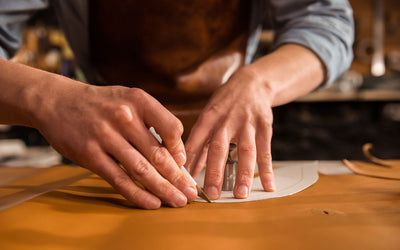
At Clara Perri, handmade English craftsmanship and interchangeable components make this approach especially rewarding. The pleasure lies in selecting the details yourself: perhaps a rich Italian leather for daily wear, a favourite metal finish for continuity, and a distinctive buckle held back for the moments when a familiar outfit needs a new line.
Caring for straps and buckles
Store belts loosely coiled or laid flat, away from direct sunlight and heat. Avoid hanging a heavy buckle from a soft strap for long periods, as this can place unnecessary strain on the leather. Before changing a buckle, place the belt on a clean surface and handle the fitting gently rather than pulling at the leather.
Smooth leather benefits from occasional appropriate conditioning, applied sparingly. Nubuck and suede should be cared for with a suitable brush and kept away from oils or conventional leather creams, which can alter the nap. Metal buckles are best wiped with a soft dry cloth after wear, particularly if they have been exposed to fragrance, moisture or cosmetics.
The finest adjustable belt system is one you will reach for often, then wear differently each time. Choose components with enough integrity to age well, and enough distinction to make even the simplest outfit feel entirely your own.
Leave a comment