How to Choose Belt Leather for Lasting Style
A belt is often the smallest piece in an outfit, yet the leather decides whether it looks considered or merely functional. Knowing how to choose belt leather means looking beyond colour and choosing a material with the right character, structure and finish for the way you dress.
Begin with the role your belt will play
The finest leather for a belt depends on its purpose. A slim black belt worn with tailoring asks for clean edges, a refined surface and enough firmness to retain its elegant line. A casual belt worn with denim can carry more texture, depth and visible grain. For a wide waist belt over knitwear or a dress, softness and a beautiful drape may matter more than rigidity.
Consider where the belt will sit and how often it will be worn. A belt threaded through trouser loops needs to withstand regular flexing and friction, while a drop-waist or dress belt can be lighter in construction. A travel wardrobe may call for a versatile smooth calf strap in a neutral shade, whereas an occasion belt can justify rich Italian Nubuck, hair-on cowhide or crystal detail.
Rather than looking for one leather to do everything, build around the belts you genuinely reach for. A considered collection usually begins with an enduring everyday leather, then adds texture and colour for different moods and occasions.
How to choose belt leather by material
Leather is not a single finish. Each hide and treatment brings its own visual language, handle and ageing qualities. The most satisfying choice is usually the one that complements your wardrobe rather than competing with it.
Full-grain leather for structure and longevity
Full-grain leather retains the natural outer surface of the hide, including its grain and subtle individual markings. It is prized for its strength, depth and ability to develop a distinctive patina over time. For a belt intended to become a daily signature, full-grain leather is an excellent starting point.
Choose it for classic trouser belts, equestrian-inspired styles and polished casual dressing. Its firmer hand gives definition to the waist and works especially well with solid brass or aged-metal buckles. Expect slight variations in grain and tone: these are signs of the leather's natural character, not imperfections.
Full-grain leather is not always the softest choice on the first wear. It will become more supple with use, but someone seeking an immediately relaxed belt for fluid dresses may prefer nubuck or suede.
Vintage calf for depth and character
Vintage calf has a worn-in richness from the outset, with colour variation and a gently weathered appearance that feels personal rather than overly polished. It suits those who appreciate heritage styling and accessories that look better once they have been lived in.
This is a particularly strong choice with denim, brushed cotton, knitwear and boots. It also softens the formality of a blazer or crisp shirt. The trade-off is intentional: vintage finishes tend to show tonal movement, so they are less suited to an ultra-uniform, boardroom-clean look than smooth calf.
Italian Nubuck for a soft, refined finish
Italian Nubuck is created by gently buffing the outer surface of leather to produce a velvety touch. It has a luxurious matte appearance, richer and more substantial than many fabrics, yet softer in mood than a high-shine leather belt.
Nubuck works beautifully with tailored wool, silk, cashmere and occasionwear, particularly in nuanced colours such as taupe, navy, chocolate or deep berry. It brings quiet texture without a pronounced grain. Its surface can mark more readily than smooth leather, however, so it rewards thoughtful care and is best reserved for occasions when its tactile finish can be appreciated.
Suede for relaxed sophistication
Suede has an unmistakably soft nap and an ease that makes formal clothing feel less rigid. A suede belt is a natural companion to flannel trousers, corduroy, linen and soft tailoring. It also offers a flattering contrast against smooth fabrics, making it a useful styling tool rather than simply a seasonal choice.
Choose suede when you want a belt to feel understated and tactile. Dark brown, tobacco, navy and charcoal are exceptionally versatile, while brighter shades can give a simple outfit a more individual finish. As with nubuck, moisture and surface marks require attention, so suede is not always the most practical option for wet-weather daily wear.
Hair-on cowhide for statement texture
Hair-on cowhide brings a bolder dimension to a belt, whether chosen in a natural animal-inspired pattern or a more graphic finish. It has presence without relying on excessive hardware, making it ideal for otherwise pared-back outfits.
Wear it with simple denim, black tailoring or a plain dress and allow the material to take focus. Because the surface is inherently distinctive, it is often best paired with a clean, restrained buckle. This is a leather for expression rather than all-purpose utility.
Look closely at finish, edges and colour
A quality belt should feel considered from every angle. Examine the leather surface first: smooth calf should have an even, confident finish, while nubuck and suede should have a consistent, fine nap. Natural grain, tonal variation and subtle markings can add beauty, but uneven coating, a plasticky shine or peeling at stressed points are less desirable signs.
Then look at the edges. Carefully finished edges help a belt retain its shape and contribute to the refined profile visible at the waist. The leather should flex without feeling brittle, and the strap should feel proportionate to its intended buckle and silhouette.
Colour deserves the same attention as material. Black is indispensable for sharper tailoring and evening dressing; dark brown offers warmth with navy, denim and earth tones; tan and cognac bring definition to lighter fabrics. Yet a belt need not match shoes exactly. A harmonious family of tones often looks more modern and more assured than a perfect match.
Match the leather to the strap width and silhouette
Leather choice should support the shape of the belt. Narrow straps benefit from smooth, compact leathers that maintain a crisp line. Wider belts can carry more texture, such as full-grain leather, suede or vintage calf, because there is room for the material to make an impression.
For jeans and more substantial trouser loops, choose a leather with enough body to sit securely and avoid twisting. For a waist belt over dresses, blouses or knitwear, a softer strap may create a more flattering contour. A drop-waist style is often about ease and proportion, so the leather should feel fluid rather than overly stiff.
This is also where personal styling matters. Minimal wardrobes often benefit from one impeccable smooth leather strap in a versatile neutral. If your wardrobe includes prints, layered fabrics or equestrian references, a textured leather can make the belt feel integral to the look.
Let the buckle and leather work together
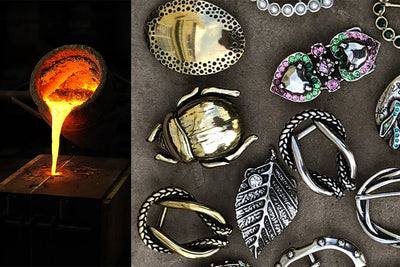
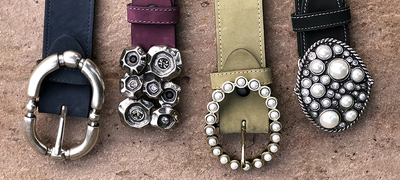
A detachable buckle changes the equation. It allows one well-chosen leather strap to take on different personalities, from classic polished metal for workwear to aged brass for weekends, or crystal embellishment for evening.
Smooth full-grain and calf leathers provide a clean setting for statement buckles. Suede and nubuck are often more harmonious with restrained hardware, allowing their softness to remain the focal point. Vintage calf pairs naturally with aged-metal finishes, while hair-on cowhide usually needs a buckle that frames rather than overwhelms its pattern.
Interchangeable components are also a considered way to buy. Instead of replacing an entire belt to refresh an outfit, you can select a different buckle or strap and retain the craftsmanship of the pieces you already own.
Choose for ageing, not only first impression
The right leather should still please you after repeated wear. Full-grain and vintage calf will deepen and soften, collecting a patina that reflects your habits. Suede and nubuck retain their elegance with gentle brushing and protection from excess moisture, but will never behave like smooth leather. That is not a flaw; it is part of their appeal.
Store belts loosely coiled or hanging away from strong heat and direct sunlight. Wipe smooth leather with a soft dry cloth, and use products suited specifically to the finish. Avoid treating nubuck, suede and hair-on cowhide as though they were polished calf, since each surface needs a lighter touch.
A belt chosen with care becomes more than a finishing detail. Choose leather that suits your life, your proportions and the clothes you return to most, then let the buckle, colour and texture make it unmistakably your own. Handmade in England, a Clara Perri belt is designed to reward that kind of considered choice.
Leave a comment