

How to Clean Suede Belts Without Marking Them
A suede belt earns its place in a considered wardrobe through texture. The soft, brushed surface gives tailoring a more relaxed character, brings depth to denim, and offers a handsome contrast beside polished footwear or a crisp shirt. To clean suede belts well, that surface must be treated differently from smooth leather: moisture, heat and forceful rubbing can alter the nap as quickly as a stain can.
Fine suede is not fragile, but it is responsive. With the right care, a belt in Italian nubuck or suede can retain its colour, suppleness and distinctively velvety finish for years of regular wear. The principle is simple: begin gently, work locally, and allow the material to dry naturally before deciding whether further treatment is needed.
Why suede belts need a lighter touch
Suede is made from the underside of a hide, buffed to create a fine, raised nap. Those tiny fibres catch the light differently as they move, which is why a suede belt has such richness and variation in colour. It is also why a mark can look more pronounced than it would on full-grain leather.
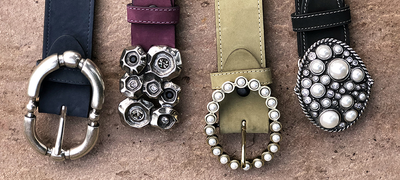
Water can leave a visible tide line if it dries unevenly. Oils can darken the fibres. Ordinary leather cream, though excellent for smooth leather, can flatten the nap or create a patchy finish on suede. A buckle introduces another consideration: solid brass, aged metal, silver-plated and crystal-set hardware should not be exposed to unnecessary moisture or cleaning residue.
The aim is not to scrub a suede belt until it looks newly manufactured. Rather, it is to lift surface dirt, reduce isolated marks and restore the direction of the nap while preserving the character of the leather.
Before you clean suede belts
Start by assessing the mark in good natural light. Dry dust, a faint scuff and a fresh water spot do not require the same approach, and using too strong a method too soon can make a minor imperfection more noticeable.
Remove the buckle if your belt has an interchangeable design. This protects decorative hardware and gives you clear access to the leather strap, particularly around the buckle holes and keeper, where handling marks tend to gather. Lay the belt flat on a clean, dry towel. Avoid bending it around a chair back or leaving it on a heated surface while you work.
Always test any cleaning product on the reverse side of the strap, or beneath the keeper where it will not be seen. Even a product labelled for suede can affect colour differently depending on the dye, finish and age of the leather. This matters especially with deep navy, rich tobacco, jewel tones and lighter neutral shades, where changes in tone may be more apparent.
Begin with a suede brush
For routine care, a dedicated suede brush is usually all that is required. Choose one with soft brass bristles, nylon bristles, or a combination of both. Brush the belt lightly in one direction to remove dry dust and release flattened fibres. Do not press hard. The purpose is to refresh the nap, not to abrade the surface.
For a small scuff, use short, controlled strokes over the affected area, then feather outwards so the surrounding nap is not left looking dramatically different. A suede brush can often improve marks caused by light contact with a table edge, shoe, bag or coat button.
If the belt has simply become dull through wear, brush its full length with a light, even touch. This produces a more uniform finish than treating one area alone. Take care around stitched edges, where aggressive brushing may roughen the seam or catch the thread.
Use a suede eraser for dry marks
A clean suede eraser is useful for dry, localised marks such as faint grime, pencil-like scuffs or surface transfer. Rub with minimal pressure, working in one small section at a time. Small crumbs will form as the eraser lifts the soil. Brush these away afterwards and reassess the leather before continuing.
A plain white pencil eraser may be used in an emergency, but a purpose-made suede eraser is preferable. Coloured erasers can transfer pigment, while heavily used erasers may carry residue from other materials. As with all suede care, restraint gives a better result than repeated rubbing.
Dealing with water marks, rain and damp
A belt caught in a shower is not automatically ruined. The concern is uneven drying. If suede becomes wet, blot it immediately with a clean, absorbent cloth. Do not rub, and do not use a hairdryer, radiator or direct sunlight to speed the process. Heat can stiffen the leather, shrink the fibres and leave the nap looking coarse.
If a distinct water mark has appeared, lightly dampen the surrounding panel rather than saturating the belt. The objective is to make the moisture level more even so that it dries consistently. Use a barely damp cloth, work carefully across a broader area, then leave the belt flat to air dry at room temperature.
Once fully dry, brush the suede gently to restore the nap. This approach is best for a light rain mark. If the belt has been soaked, or if the leather feels stiff after drying, professional cleaning is the wiser choice.
Treating oil and food marks
Oil requires patience. Do not add water and do not reach for washing-up liquid. Instead, cover the fresh mark with a small amount of absorbent powder, such as cornflour or talcum powder, and leave it undisturbed overnight. The powder can draw some oil from the fibres without spreading it.
The following day, brush away the powder gently. Repeat once if the mark is improving but remains visible. A persistent oil stain, particularly on pale suede, is a good reason to consult a specialist cleaner. Home remedies involving vinegar, alcohol or soap can produce uneven colour and may be impossible to reverse.
For mud, allow it to dry completely before touching it. Wet mud is easily pushed deeper into the nap. Once dry, loosen it with a suede brush, working from the outside of the mark towards the centre, then use an eraser only if a faint residue remains.
When a suede cleaner is appropriate
A specialist suede and nubuck cleaner can be useful for broader soiling that brushing alone will not shift. It should be chosen carefully, tested discreetly and applied sparingly according to the product instructions. A foam or cleaner designed specifically for suede is preferable to general leather cleaner, which may contain oils or conditioners unsuitable for a raised finish.
There is a trade-off here. Cleaning a whole belt may create a more even result than spot-cleaning, but every wet-cleaning process carries some risk of slight colour change. On a luxury belt with a saturated dye, contrast stitching, crystal embellishment or a particularly fine finish, professional care is often the more considered investment.
Never immerse a suede belt in water. Do not machine wash it, steam it, or apply conventional polish and wax. These methods are designed for other materials and can permanently alter suede’s tactile surface.
Protect the buckle and leather separately
A detachable buckle makes care more precise. Clean the suede strap and buckle as separate components, then refit the hardware only when both are completely dry. Metal buckles should be wiped with a soft, dry cloth. Avoid spraying suede protector or cleaner near the buckle, especially where plated finishes, crystals or aged-metal detailing are concerned.
If a buckle has an intentionally antiqued finish, over-polishing can remove the contrast that gives it character. The same principle applies to the leather: preservation is more appropriate than making every element look artificially uniform.
Storage that prevents unnecessary cleaning
The most effective way to preserve suede is to limit the conditions that create marks in the first place. Store your belt flat in a drawer, or hang it from a broad, smooth belt hanger so it is not sharply creased. Keep it away from strong sunlight, damp wardrobes and direct heat.
After wearing, allow the belt to air for a short time before storing it, particularly after a warm day or a long journey. Avoid placing it against dark denim, wet outerwear or freshly treated shoes, as dye and product transfer can be difficult to remove from pale suede.
A suede protector formulated for suede and nubuck may be applied before the first wear and renewed occasionally. It can provide a useful barrier against light moisture and surface dirt, but it is not an invitation to wear the belt in heavy rain. Test it first and use it sparingly, as excessive application can change the feel or depth of colour.
A well-made belt should develop a personal patina, not a neglected appearance. Brush it after occasional wear, respond calmly to marks, and seek specialist help for anything stubborn. That measured care allows the suede, the craftsmanship and the buckle you have chosen to remain a distinctive part of your wardrobe.
Leave a comment