
Brass Versus Silver Buckle Styles for Your Wardrobe
A buckle may occupy only a small part of a belt, yet it has an outsized effect on how the whole piece is read. When considering brass versus silver buckle styles, the question is not simply which metal you prefer. It is whether the hardware brings warmth or clarity to your leather, supports the rest of your wardrobe, and feels right for the occasion.
For a well-made interchangeable belt, the buckle is also an opportunity rather than a fixed decision. Changing the finish can shift a familiar Italian Nubuck strap from relaxed country polish to crisp city tailoring, without replacing the leather itself.
Brass versus silver buckle styles: the essential difference
Brass has presence. Its golden tone carries natural warmth and a sense of permanence, particularly when made from solid brass or finished with an aged patina. It pairs beautifully with leathers that have depth of colour and texture: vintage calf, rich tan, chocolate suede, cognac nubuck and hair-on cowhide. A brass buckle can make a belt feel more grounded, artisanal and characterful.
Silver-toned hardware brings a cooler, cleaner line. Whether bright silver plating, softly brushed metal or an aged silver finish, it often feels more graphic against black, navy, grey and jewel-toned leather. It can sharpen a tailored look, complement monochrome dressing and lend contemporary definition to a minimal belt.
Neither is inherently more formal, more versatile or more luxurious. The distinction lies in the relationship between metal, leather and the clothes you wear most often. A polished silver buckle may be ideal with a fine black belt for evening, while an elegant solid brass buckle can look equally considered with a dark brown leather belt and a softly tailored suit.
Choose the undertone before the trend
The most dependable way to select buckle hardware is to begin with undertones. Brass belongs to the warm end of the spectrum. It is naturally at home beside cream, camel, tobacco, olive, rust, burgundy and warm denim washes. It also echoes gold jewellery, tortoiseshell frames and the burnished details found in heritage-inspired footwear and bags.
Silver is cooler and more neutral. It works particularly well with optic white, charcoal, black, navy, cool beige, cobalt and deep green. If your everyday jewellery is platinum, silver or white gold, silver hardware can make your accessories feel quietly coordinated without appearing matched too precisely.
Personal colouring can be useful, but it need not become a rule. Someone drawn to cool-toned clothing may still choose brass for the contrast it provides against dark indigo or black. Equally, silver can give a welcome modern edge to a warm tan belt. Consider the finish as part of the composition, not as an isolated swatch.
Let the leather lead
Leather changes the character of every metal. Full Grain black leather gives silver a precise, metropolitan feel, while the same buckle on pale grey suede appears softer and more understated. Brass against black leather is bolder, particularly in a polished finish, but an aged brass buckle can look wonderfully restrained when the form is simple.
On brown and tan leathers, brass tends to emphasise depth and hand-finished character. It is especially convincing with belts intended for jeans, linen trousers, knitwear and equestrian-inspired dressing. Silver gives these leathers a more contemporary contrast, which can be useful when you want a classic strap to feel less traditional.
Texture matters too. The tactile surface of Italian Nubuck and suede benefits from hardware with a considered finish rather than high shine alone. Brushed silver, antique silver and aged brass all have enough visual softness to sit comfortably beside a nappe. A bright polished buckle is often best reserved for smoother leather, where its reflective surface feels intentional.
Match the buckle to how the belt will be worn
A belt worn through tailored trouser loops asks for discretion. A narrower silver buckle in a clean rectangular or gently curved shape will sit neatly beneath a jacket and complement polished black or navy leather. For a warmer tailoring palette, such as tobacco wool, olive flannel or cream linen, brass offers a similarly refined alternative.
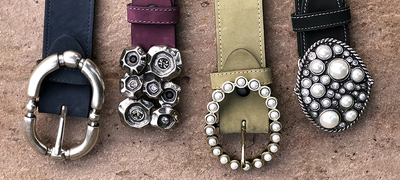
With denim, the choice becomes more expressive. Brass has an easy affinity with indigo, washed denim and substantial leather straps. A substantial roller buckle or classic frame in solid brass feels familiar without being ordinary. Silver can be just as effective with black denim, white jeans or a pared-back wardrobe built around charcoal and navy.
Wide belts and drop-waist styles allow the buckle to become a focal point. Here, silver hardware can create a sculptural, almost jewellery-like effect, especially with smooth black leather or crystal detailing. Brass brings a more relaxed opulence to wide suede, vintage calf and richly coloured straps. It is the difference between a sharp line and a warmer statement.
For equestrian-inspired belts, aged brass is a natural choice, recalling traditional saddle hardware and the practical beauty of leatherwork. Yet antique silver can offer a more tailored interpretation, particularly on dark brown or black leather. The silhouette of the buckle matters as much as the colour: a restrained stirrup-inspired form reads differently from an oversized decorative centrepiece.
Consider polish, patina and proportion
The words brass and silver describe colour families, but finish is what determines much of the mood. Polished brass is bright and formal in its own way. It catches the light and gives a simple black, navy or chestnut belt a dressier presence. Aged brass is mellower, with depth that suits relaxed leather, countryside dressing and pieces intended to improve with wear.
Bright silver is crisp and light-reflective. It can be striking on an evening belt or a sleek narrow strap, particularly when paired with crystal embellishment. Brushed or aged silver is more forgiving for daily wear, offering definition without drawing attention away from the leather and silhouette.
Proportion deserves equal attention. A large brass buckle can be magnificent on a wide belt but may overpower a delicate dress or fine trouser strap. Likewise, a slim silver buckle may disappear against a broad, textured belt. Match the scale to the belt width, then decide how visible you want the hardware to be from a distance.
Build a more versatile belt wardrobe
If you wear belts regularly, choosing one metal forever is rarely necessary. An interchangeable belt system allows a favourite leather strap to work across more settings: brass for weekends, travel and warmer textures; silver for tailoring, evening and cooler palettes. This is not about accumulating accessories for their own sake. It is about selecting components with enough quality and distinction to earn repeated wear.
A useful starting point is one versatile strap in black, dark brown or tan Full Grain leather, paired with the buckle finish you will wear most. Add the second metal when you notice a genuine gap in your wardrobe. A silver buckle can refresh a beloved black strap for dinner or work, while a solid brass buckle can give the same belt a more relaxed, heritage-led character for off-duty dressing.
At Clara Perri, each combination is considered as a meeting of leather, hardware and individual style. Handmade in England, a belt should feel designed for its owner rather than selected from a uniform rail.
Care for the finish you choose
Both finishes reward a little care. Wipe hardware with a soft, dry cloth after wear, especially if perfume, hand cream or moisture may have come into contact with it. Store belts flat or gently rolled, avoiding prolonged pressure on the buckle that could mark leather or dull the surface.
Brass may develop a natural patina over time. For many, this is part of its appeal: proof of use, softened into the character of the piece. Silver-toned plating should be treated with particular care, avoiding abrasive cleaners and harsh polishing cloths unless they are specifically suitable for plated metal. A gentle approach preserves the intended finish.
The most successful choice is the one that makes you reach for the belt repeatedly. Hold the buckle against the leather, consider the shoes, watch and jewellery you wear most, then choose the finish that gives your wardrobe one more possibility rather than one more compromise.
Leave a comment