
Which Belts Suit Petites? A Refined Fit Guide
A belt can make a beautifully cut trouser sit perfectly, give a fluid dress intention, or quietly disrupt an otherwise elegant silhouette. For those wondering which belts suit petites, the answer is not simply “thin belts only”. Proportion matters, certainly, but so do waist placement, buckle scale, leather finish and the visual line created by the whole outfit.
The most flattering choice is one that defines rather than divides the figure. A finely made belt with considered hardware has presence without asking for attention, allowing the wearer to set the proportions on her own terms.
Which belts suit petites best?
Petite frames are often served best by belts that feel purposeful rather than oversized. In practical terms, a narrow to medium-width strap, usually around 2 to 3 cm, is an exceptionally versatile starting point. It gives shape to tailoring, denim and dresses without creating a heavy horizontal break across the body.
That said, height alone should not dictate every decision. A petite woman with a longer torso may enjoy a slightly wider belt at the natural waist, particularly over a coat, knitwear or a structured dress. Equally, someone with a short torso may prefer a slimmer strap and a discreet buckle to preserve a longer, uninterrupted line. The finest styling considers proportions rather than labels.
A considered leather belt earns its place because it can adapt. An interchangeable buckle system is especially useful here: the same Italian leather strap can appear restrained with a polished silver-plated buckle for day, then more distinctive with aged metal, solid brass or crystal hardware for an evening occasion.
Begin with belt width, not fashion rules
Width has the most immediate effect on how a belt reads against the body. Narrow belts are naturally light in appearance and work well when worn through trouser loops, over fine knitwear or at the waist of a fitted dress. They offer definition while allowing the rest of the outfit to remain the focus.
Medium belts bring greater structure. They suit high-waisted trousers, shirt dresses and relaxed tailoring, especially where the fabric needs a little visual anchoring. Choose a supple full-grain leather or Italian nubuck strap rather than an excessively stiff construction. The belt should follow the body and sit with ease, not stand away from it.
Wide belts can also suit petites, but they require more care. A 5 cm or wider style is most successful when it has a clear role: cinching a long coat, shaping a simple column dress, or creating an intentional equestrian-inspired waist. Worn over multiple bulky layers, a very wide belt can shorten the torso. Balance it with a tonal outfit, a clean neckline and a buckle that does not dominate the centre of the body.
Match buckle scale to the belt and outfit
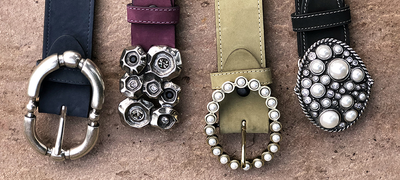
A substantial buckle is not off limits, but scale should feel harmonious. Large, highly contrasting hardware can become the visual centre of an outfit, which may be exactly the desired effect with a minimal black dress or crisp white shirt. For everyday wear, a smaller oval, softly rectangular or gently curved buckle is often more forgiving and enduring.
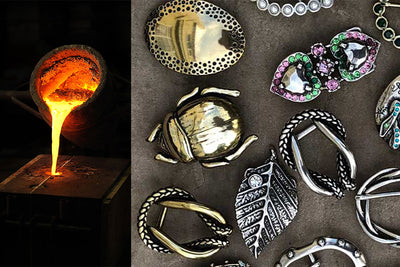
The finish changes the effect, too. Polished silver offers a clean, contemporary note. Solid brass brings warmth to navy, cream, tobacco and denim. Aged metal has a relaxed, heritage character that complements vintage calf or suede. Crystal buckles are best treated as jewellery: a beautiful focal point for an evening dress, not necessarily an all-purpose solution.
Wear the belt where it lengthens your proportions
The natural waist is usually a strong starting point for petite dressing, especially with dresses, coats and high-rise trousers. It creates a defined centre and gives the leg line a little more length. A belt placed just above the natural waist can achieve a similar effect on a softly cut midi dress or a fuller skirt.
Low-slung, drop-waist belts are more nuanced. They can look wonderfully modern with long-line shirts, relaxed denim or a lean dress, but they tend to lower the visual waistline. If you are petite and prefer this style, keep the belt refined and close in colour to the outfit. A narrow suede strap with a modest buckle will usually feel more deliberate than a broad, sharply contrasting design.
For trousers, threading a belt through the loops in a similar tone to the shoe creates a composed, lengthening effect. This is not a strict rule, merely a reliable one. A black leather belt with black loafers or boots, for example, can keep a tailored outfit looking uninterrupted from waist to floor.
Choose colour and texture with a light hand
A belt does not need to disappear to flatter a petite frame. A contrasting colour can be exceptionally chic, particularly when it echoes a bag, shoe or piece of jewellery. The key is to choose one confident contrast rather than several competing ones.
Tonal dressing is the simplest route to an elongated silhouette. A deep brown belt against chocolate trousers, navy leather against an inky dress, or black against charcoal tailoring creates definition without a hard visual stop. This approach is ideal for workwear and formal occasions, where a polished line matters.
Texture adds character without relying on loud colour. Italian nubuck gives a matte, velvety depth that is elegant with knitwear and soft tailoring. Suede feels relaxed and rich for weekend dressing. Vintage calf develops an individual patina over time, making it particularly compelling with denim, wool and equestrian-inspired pieces. Hair-on cowhide can be striking, but works best when the rest of the outfit is edited and clean.
Consider the visual weight of the outfit
A delicate belt paired with heavy boots, an oversized knit and broad trousers can disappear. Conversely, a broad belt with a fine silk dress can feel too assertive. The most successful combinations have a shared weight: lighter straps for lighter fabrics, more substantial leather for tailoring, denim and outerwear.
This is where craftsmanship is visible. A handmade belt in quality leather holds its shape and colour while remaining comfortable against the body. It does not need excessive thickness, oversized branding or elaborate ornament to feel luxurious. Fine edge finishing, well-chosen leather and balanced metalwork do the work quietly.
Styles worth keeping in a petite wardrobe
Rather than collecting belts for every passing trend, it is more useful to build a small selection around the occasions you dress for. A slim black full-grain leather belt with polished hardware handles trousers, jeans and day dresses. A warm tan or cognac strap in vintage calf brings depth to cream linen, denim and camel tailoring. A medium-width nubuck belt offers softness for knitwear and fluid dresses.
For occasions, choose a buckle with a little distinction. A crystal style can lend an otherwise simple evening look a couture-like finish, while an elegant silver-plated or brass buckle makes a restrained statement over a coat or a dark silk dress. Clara Perri’s detachable buckle approach makes this particularly considered: one beautifully made strap can be refreshed to suit the season, setting and mood.
Fit is as important as proportion
Even the right width can look less refined if the fit is wrong. A belt should fasten comfortably around the middle holes, allowing for the natural variations of different fabrics and layers. If the tail is excessively long, it can interrupt the line of the outfit; if it is too short, the belt may look strained.
When wearing a belt at the waist rather than through trouser loops, measure that exact point. Waist, high waist and low hip measurements can differ considerably. Bespoke sizing is worth considering for petites because a correctly proportioned strap and tail length create a notably more polished result.
The most elegant belt is not necessarily the smallest or quietest one. It is the one that gives shape to your clothes, reflects your personal style and feels so well made that you reach for it without hesitation.
Leave a comment