

Which Buckle Suits Formalwear? A Refined Guide
A formal belt is judged in seconds, often without anyone consciously noticing it. The buckle sits at the centre of the silhouette, where the line of a jacket, trouser waistband or carefully cut dress meets. So, which buckle suits formalwear? Usually, it is one with a clean profile, considered proportion and a finish that supports the rest of the look rather than competing with it.
The answer changes slightly between a tailored business suit, a wedding guest outfit and evening dress. Yet the principle remains consistent: formal hardware should look intentional, beautifully finished and quietly assured.
Which buckle suits formalwear best?
For most formalwear, a slim rectangular or gently curved frame buckle is the most reliable choice. Its geometry is disciplined, its fastening is familiar, and it creates a neat horizontal line at the waist. A simple prong buckle in polished solid brass, silver plating or a refined gunmetal finish has the permanence that formal dressing calls for.
Avoid overly large buckles, prominent logos and heavily distressed metal when the occasion is conservative. These details can be striking with denim, countrywear or relaxed tailoring, but they interrupt the restraint of a formal outfit. The same applies to thick, casual straps with pronounced grain or contrast stitching. Formal dressing benefits from precision.
That does not mean every formal buckle must be plain. A softly sculpted frame, a discreetly engraved edge or a narrow buckle with a polished, jewellery-like quality can be exceptionally elegant. The distinction lies in refinement rather than decoration for its own sake.
Start with the formality of the occasion
Business tailoring and professional events
For office tailoring, client meetings and formal lunches, choose a classic frame buckle with a restrained shine. Silver-tone hardware works particularly well with black, charcoal, navy and cool grey tailoring. Warm polished brass brings depth to brown, tobacco, camel and deep navy leathers, especially when paired with gold jewellery or a watch in a similar tone.
For men, a 30 to 35 mm leather belt is generally the most balanced width for suit trousers. A narrower strap can look elegant on a particularly slim trouser, while a wider belt begins to feel less formal. For women, the right width depends more on the garment: a fine belt can define a tailored dress or high-waisted trouser, while a slightly wider style can bring structure to a blazer worn closed.
Smooth full-grain leather, fine calf and polished Italian Nubuck offer a composed finish. If the belt will be worn often with business tailoring, select a buckle whose surface will remain versatile across seasons rather than one chosen only for a single outfit.
Weddings, receptions and polished social dressing
Social formalwear permits more personality. A sleek oval buckle, an elegant curved frame or a softly burnished gold finish can give a linen suit, silk dress or sharply tailored jumpsuit a more individual character. This is the setting in which a buckle can become an accessory rather than simply a fastening.
The key is to maintain proportion. If the outfit has a clean, uninterrupted line, a distinctive buckle may become the focal point. If the fabric is already embellished, printed or richly textured, choose a quieter buckle and let the garment lead. Pairing a narrow polished buckle with a silk dress, for example, often feels more considered than adding broad hardware.
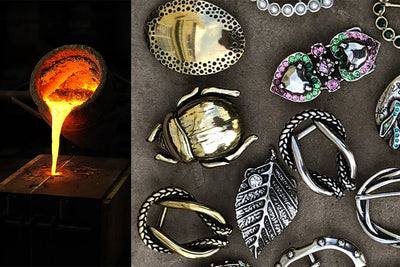
Crystal buckles can be beautiful for evening receptions and celebratory dressing, especially against black, midnight, ivory or jewel-toned leather. They work best when the crystals are finely set and the surrounding metal remains elegant. A crystal buckle should read as couture detail, not novelty sparkle.
Black tie and eveningwear
The strictest formal settings require the most restraint. For traditional black tie, men normally wear braces or a cummerbund rather than a visible belt. If a belt is required by the trousers, it should be exceptionally slim, black and unobtrusive, with a small polished buckle that disappears beneath the dinner jacket.
For women’s eveningwear, there is greater freedom. A slender belt with a fine gold or silver buckle can shape a column dress or bring definition to fluid tailoring. A crystal buckle may also suit the occasion, provided it complements the scale of the jewellery and does not pull focus from the overall silhouette.
Think of the buckle as you would a cufflink or earring: a small point of light and finish, not the main event.
The metal finish should support the outfit
Matching every metal exactly is not essential, but competing finishes can make formalwear feel unsettled. A silver-plated buckle sits naturally alongside platinum, white gold, silver jewellery and cool-toned watches. Solid brass or polished gold-toned hardware works beautifully with yellow gold, warm ivory, chocolate leather and autumnal tailoring.
Aged-metal finishes need more judgement. Their softened character can look superb with heritage-inspired wool tailoring, equestrian details or textured Italian leather. However, for a boardroom presentation, ceremonial event or minimalist evening look, a cleaner polished finish is usually the stronger choice.
If you are wearing a watch, do not feel obliged to match its case exactly. Instead, look for harmony. A brushed silver watch and a polished silver buckle can work well together because they share a colour family. A large bright gold buckle beside cool silver jewellery, however, is more likely to appear accidental.
Shape and scale matter more than trend
The best formal buckle has enough presence to finish the waist, but not so much that it divides the outfit in two. This is why compact rectangular frames remain a classic. Their scale is easy to control, and they complement the clean vertical lines of tailoring.
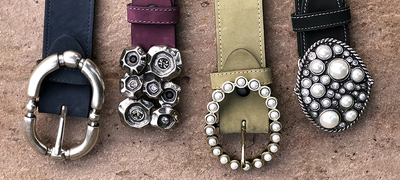
Rounded and oval buckles can be equally formal when they are slim and smoothly finished. They are particularly flattering on softer silhouettes, dresses and high-waisted trousers, where a hard-edged rectangle may feel overly severe. A curved buckle can echo the body’s lines while retaining a polished appearance.
Wide plaque buckles, substantial western forms and elaborate equestrian hardware are more situational. They can look compelling with a structured wool skirt, a riding-inspired boot or a contemporary suit styled for an event. They are less suitable for conventional business formalwear, where the belt should remain a supporting detail.
The belt strap and buckle must also be in balance. A delicate buckle on a broad strap can look insubstantial; a heavy buckle on a narrow belt can pull and distort the leather. Consider the pair as one piece of design, with the leather’s thickness, edge finish and colour all contributing to the effect.
Choose leather with the same care as hardware
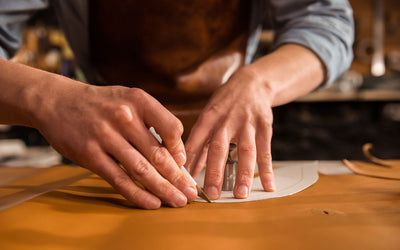
A fine buckle cannot make a casual strap formal. The leather needs a clean finish, neatly painted or turned edges and a consistent depth of colour. Black is the most traditional choice for eveningwear and dark tailoring. Deep brown is excellent for business suits, while navy, burgundy and dark green can lend quiet distinction when they are echoed elsewhere in the outfit.
Suede and Nubuck can be formal in daytime settings, particularly with flannel, tweed or soft tailoring. They bring texture without looking casual when the belt is slim and the buckle is polished. For evening, smooth leather generally has the clearer, more luminous finish.
This is where an interchangeable belt system earns its place in a well-built wardrobe. A single beautifully made strap can take on a different character with a change of buckle, while one preferred buckle can be paired with black, brown or coloured leather according to the occasion. Clara Perri’s Handmade in England approach makes that versatility feel considered rather than improvised.
A final check before you leave
Fasten the belt and look at the full outfit from a few steps back. The buckle should sit flat, centred and in proportion with the waistband. It should not pull at the leather, create a visible bulge beneath a jacket or demand attention before the tailoring does.
The most successful formal buckle is rarely the loudest piece in the room. It is the one that makes the leather, the cut of the clothes and the wearer’s own sense of style appear effortlessly resolved.
Leave a comment