Why Choose Vegetable Tanned Leather for Belts?
A belt is handled more than almost any other accessory. It is fastened in the morning, adjusted through the day and often paired with the same favourite trousers, tailoring or denim for years. That close contact is precisely why choose vegetable tanned leather is a worthwhile question: the material does not merely hold its shape, it develops a record of how it has been worn.
For a considered wardrobe, vegetable tanned leather offers character that cannot be factory-applied. Its surface gradually deepens, softens and acquires a patina particular to its owner. On a finely made belt, this evolution gives a familiar silhouette greater distinction rather than making it look tired.
Why choose vegetable tanned leather for a belt?
Vegetable tanning is a traditional process that uses natural tannins derived from plant matter, commonly bark, leaves, wood and fruit. The hides are worked slowly, allowing the tannins to penetrate and create leather with body, structure and a distinctive natural handle.
That structure makes it especially suited to belts. A quality belt must carry the weight of its buckle, sit cleanly through belt loops and resist becoming limp with repeated wear. Vegetable tanned leather begins with a pleasing firmness, then becomes more supple as it is worn without losing its essential presence.
Its appeal is also visual. Rather than presenting a perfectly uniform, sealed-looking finish, vegetable tanned leather often reveals subtle grain variation, tonal movement and the occasional natural marking. These are not faults to disguise. On a well-selected hide, they are evidence of a material with depth.
A patina that belongs to you
The defining quality of vegetable tanned leather is its capacity to change beautifully. Exposure to light, warmth and the natural oils from handling can enrich the colour over time. A pale natural leather may become honeyed; a darker shade may gain a greater depth and lustre around the edges and buckle area.
This is particularly compelling in an accessory worn often. The leather responds to your routine, from the way you fasten it to the jeans, trousers or dresses it accompanies. Two belts made from the same hide can look noticeably different after a year, each with an individual finish that cannot be duplicated.
For those who prefer accessories to remain exactly as purchased, this may be a reason to choose another leather type or a more protected finish. Vegetable tanned leather rewards wear, but it does not remain visually static. Its changing surface is the point.
Substance, shape and a confident hand
A belt should feel substantial without becoming cumbersome. Vegetable tanned leather has a naturally dense fibre structure that lends itself to clean-cut edges, neat stitching and enduring form. It is often chosen for classic leather goods because it can be shaped, burnished and finished with exceptional precision.
For beltmaking, this means a strap can retain a smart line beneath a blazer while also working with relaxed denim or equestrian-inspired dressing. The leather has enough body to frame a statement buckle, whether polished solid brass, silver plated or finished in an aged metal tone, without allowing the hardware to overwhelm the strap.
The result is not stiffness for its own sake. With use, a well-made vegetable tanned belt settles to the wearer’s waist and becomes more comfortable, while continuing to look composed. It is this balance of initial structure and long-term softness that makes the material a natural choice for a wardrobe staple.
The value of slower leatherworking
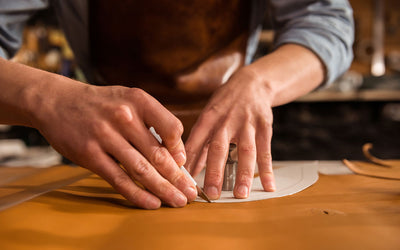
Vegetable tanning takes time. Compared with quicker industrial processes, it demands careful management of the hide at each stage, from tanning and drying to dyeing and finishing. That slower approach is reflected in the feel of the finished leather and in the level of attention required to make it well.
It also encourages a different relationship with an accessory. A vegetable tanned belt is not designed as a brief seasonal purchase. It is chosen for repeated wear, occasional care and an appearance that becomes more personal over the years. This makes it well suited to a wardrobe built around fewer, better pieces.
There is a useful distinction to make here. Vegetable tanning alone is not a guarantee of quality, ethical sourcing or environmental credentials. Those depend on the tannery’s practices, the origin of the hide, the dyes and finishes used, and how the finished product is made. Equally, chrome-tanned leather should not be dismissed automatically: it can offer excellent softness, colour consistency and performance when responsibly produced.
The reason to choose vegetable tanned leather is first its material character - its firmness, rich ageing and capacity for fine craft - rather than a simplified sustainability claim.
A natural partner for personal design
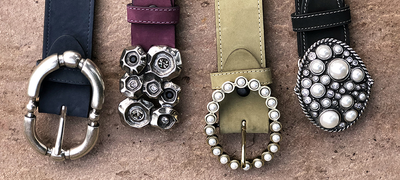
For a belt with interchangeable buckles, the strap needs enough integrity to be changed, fastened and worn repeatedly. Vegetable tanned leather brings a reassuring solidity to that function. It creates a composed foundation for changing the mood of an outfit through hardware, from a restrained classic buckle for weekday tailoring to a more decorative crystal or sculptural finish for evening wear.
This flexibility is especially valuable when building a small but expressive belt wardrobe. One carefully chosen leather strap can take on a different character with a change of buckle, while its own patina keeps the combination personal. The leather becomes the constant, and the hardware offers the variation.
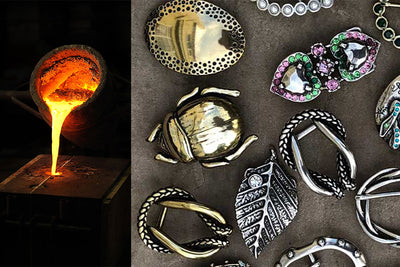
At Clara Perri, this principle sits naturally alongside Handmade in England craftsmanship: considered Italian leather, carefully finished edges and distinctive detachable buckles are designed to work together as lasting components rather than disposable fashion details.
What to expect from the first wear
A new vegetable tanned leather belt may feel firmer than a soft suede, nubuck or heavily finished fashion belt. This is normal. The leather is gradually responding to movement and will become more accommodating with regular wear.
It may also show surface changes sooner than highly corrected leather. Minor scratches, darkening near the fastening point and gentle creasing are all part of its development. Often, light marks can be softened with a clean, dry soft cloth or will blend into the patina naturally. Deep scratches and significant staining are less easily concealed, which is why a little thoughtful care matters.
Choose the colour with this in mind. Lighter natural, tan and cognac tones tend to reveal the ageing process most clearly, making them an excellent choice for someone who appreciates visible patina. Deep brown, burgundy and black can offer a more understated evolution while retaining the distinctive density and finish associated with vegetable tanned leather.
How to care for vegetable tanned leather
Care should be restrained. Leather does not benefit from frequent, heavy applications of product. Remove dust with a soft dry cloth, keep the belt away from prolonged direct heat and allow it to dry naturally if it gets wet. Never place it on a radiator or use a hairdryer, as rapid drying can leave the leather dry and uneven.
A small amount of an appropriate neutral leather conditioner may be used occasionally, after testing it on an inconspicuous area first. Over-conditioning can darken leather and soften it more than desired, particularly on a structured belt. Avoid household cleaning products, excessive water and sprays not intended for quality leather.
When storing a belt, either hang it by the buckle or coil it loosely in a drawer. Do not fold it sharply. If it has a detachable buckle, take care when changing components so that the strap and fastening mechanism remain free from unnecessary strain.
Choosing the right belt for your wardrobe
Vegetable tanned leather is an excellent choice when you value definition, longevity and an evolving finish. It works particularly well for classic belts, wide waist belts, equestrian styles and designs where the buckle is intended to be a focal point. The material gives these silhouettes a sense of intention.
If your priority is an exceptionally soft, velvety texture from the first wear, Italian nubuck or suede may be more suitable. If you need a belt for highly exposed conditions, a more protected leather finish may be the practical choice. Luxury is not about selecting one material for every purpose; it is about choosing the material that serves the design and the way you live.
A vegetable tanned belt is best chosen with the expectation that it will become yours in a visible way. Wear it often, let its colour and finish mature, and allow the details of daily life to give an already finely crafted accessory its final character.
Leave a comment