

Full Grain Versus Suede Belts: Which Suits You?
A belt can make a quiet outfit feel considered or give a tailored look its point of view. The choice between full grain versus suede belts is not simply one of colour or finish. It changes the line of an outfit, the way the leather wears over time and how readily a belt moves between weekday tailoring, relaxed weekends and evening dressing.
Full-grain leather brings clarity, structure and a beautiful natural depth. Suede offers softness, richness and a more tactile kind of luxury. Neither is inherently superior. The right choice depends on how you dress, where you wear your belts and whether you want your accessory to be a crisp finishing detail or a textural focal point.
Full Grain Versus Suede Belts: The Essential Difference
Full-grain leather is made from the outermost surface of the hide, retaining its natural grain and character. It is prized for strength, density and the individual markings that make every piece distinct. A well-made full-grain belt has a composed appearance from the first wear, then develops a more personal patina as it is worn.
Suede is created from the underside of the hide or from a hide that has been split and buffed to form its signature velvety nap. It has less surface sheen than smooth leather, but its depth of colour can be extraordinary. Italian suede and nubuck bring a particularly refined finish, with a soft hand that gives an outfit warmth without looking casual by default.
The distinction is immediately visible. Full grain reflects light gently across a smooth, natural surface, lending definition to the waist or trouser line. Suede absorbs light, creating a softer, more dimensional effect. This makes suede especially effective with wool, cashmere, brushed cotton and denim, while full grain sits naturally alongside polished tailoring, silk, crisp poplin and fine knitwear.
Choose Full Grain for Structure and Lasting Character
A full-grain belt is often the more adaptable choice for a tightly edited wardrobe. In black, deep brown, cognac or a considered seasonal shade, it has the assurance to work with formal trousers, jeans, dresses and skirts. Its surface feels intentional rather than decorative, allowing a distinctive solid brass, silver-plated or aged-metal buckle to take its proper place.
For workwear, full grain offers a particularly assured finish. A slim strap with a clean buckle can define high-waisted trousers without interrupting their line. A wider full-grain belt brings shape to a blazer, shirt dress or tailored coat, particularly when the rest of the outfit is pared back. The leather’s natural firmness helps it hold its form, so the belt reads as a designed accessory rather than an afterthought.
Its longevity is another consideration. Full-grain leather is capable of ageing exceptionally well when properly cared for. Minor scratches and changes in tone are part of its appeal, adding depth rather than diminishing the material. This does not mean it is indestructible. Water, prolonged heat and overcrowded storage can still affect the leather, while contact with cosmetics or fragrance may mark a pale strap. Yet full grain is generally forgiving of regular wear and rewards it with character.
Those who prefer a belt to become a familiar wardrobe signature will often favour full grain. It carries use beautifully, especially in classic shades, and feels appropriate across seasons. For a frequent traveller or anyone who wants one belt to cover a range of polished occasions, this dependability has real value.
When full grain is the stronger choice
Choose full grain when you want a belt with definition, a smooth finish and a long-term place in your wardrobe. It is particularly well suited to city dressing, business attire, occasionwear with clean lines and equestrian-inspired looks. It also makes an excellent foundation for interchangeable buckles, as the composed leather surface allows the hardware and strap to feel equally considered.
Choose Suede for Softness, Colour and Texture
Suede has an ease that smooth leather cannot replicate. It can soften sharp tailoring, add interest to a simple knit and jeans combination, or make a neutral outfit feel more layered. A suede belt in tobacco, navy, forest green, chocolate or warm stone can introduce colour with far more subtlety than a bright accessory.
It is often described as casual, but that only tells part of the story. Fine suede can look remarkably elevated, particularly when the strap is carefully cut, the edges are neatly finished and the buckle has weight and presence. A narrow suede belt with a polished metal buckle can be elegant with a silk midi dress. A wider belt in rich suede can bring a relaxed sophistication to a cashmere coat or fluid wool trousers.
The beauty of suede lies in its nap. As the fibres move, the colour appears to deepen or lighten, giving the leather a living, almost tonal quality. This makes it especially appealing for those who prefer accessories with visual softness. It also pairs beautifully with materials that have their own texture, such as tweed, corduroy, linen and hair-on cowhide.
Suede does ask for more mindful care. Rain, oil and ingrained dirt can affect its surface more readily than smooth full-grain leather. A protective treatment applied before wear can be sensible, particularly for pale colours or belts worn frequently outdoors. After use, a soft suede brush can lift the nap and remove surface dust. If the belt becomes wet, allow it to dry naturally away from radiators or direct heat, then brush it gently once dry.
When suede is the stronger choice
Choose suede when texture is central to the outfit, when you want a gentler contrast against tailoring, or when your wardrobe is built around layered autumnal dressing. It is also a compelling choice for social occasions where the clothes are simple but the accessories deserve attention. The tactile quality of suede makes even a restrained buckle feel more expressive.
Consider the Belt’s Proportions, Not Only Its Leather
Leather choice matters, but proportion can be equally decisive. A slender full-grain belt may feel delicate and precise, while a broad suede belt can create a confident waistline. The same leather can look entirely different depending on its width, the buckle scale and where it sits on the body.
For tailored trousers and belt loops, a narrower strap usually offers the cleanest result. Full grain is often ideal here because it retains a neat line. For dresses, knitwear and outerwear, a wider strap gives more opportunity for suede’s texture to register. A drop-waist belt can also benefit from softer suede, which makes the silhouette feel relaxed rather than overly fixed.
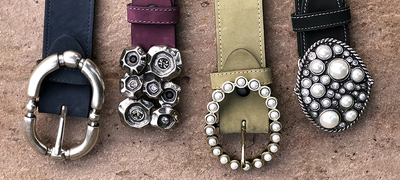
Buckle selection should follow the same logic. A highly detailed buckle can sit beautifully against plain full grain, where the smooth surface creates a controlled backdrop. Suede often pairs well with a simpler buckle, allowing the leather’s texture to remain part of the design. That said, crystal details on deep navy or black suede can be striking for evening, while aged metal against vintage calf or full grain has an enduring, equestrian quality.
Build a More Flexible Belt Wardrobe
There is no need to choose one leather forever. A thoughtful belt wardrobe usually begins with a full-grain strap in a versatile neutral, then adds suede for texture and seasonal variation. If your style moves from formal dressing to relaxed weekends, the two materials serve different and complementary roles.
An interchangeable system makes this especially practical. Rather than buying complete belts for every occasion, you can change the buckle or strap to suit the clothes, season or mood. A full-grain black strap with a polished buckle may suit a dinner reservation and a business meeting, while a tobacco suede strap with aged hardware can transform the same outfit formula for the weekend. Clara Perri’s handmade approach allows the leather and hardware to be chosen as a considered pairing rather than a fixed compromise.
Storage will help both materials retain their finish. Hang belts gently by their buckles or lay them flat without folding sharply. Keep full-grain leather away from prolonged direct sunlight, and protect suede from dust and friction against rough surfaces. Avoid storing either beside damp shoes or in tightly packed drawers, where shape and surface can suffer.
The most rewarding belt is one you reach for instinctively. Choose full grain when you want polish, structure and a leather that tells its story over years of wear. Choose suede when the outfit calls for softness, depth and a more tactile expression. Then allow the buckle, proportion and colour to make that choice distinctly your own.
Leave a comment