

Guide to Belt Proportions for a Polished Wardrobe
A belt can quietly correct the line of a coat, define a fluid dress or give tailored trousers a more intentional finish. Yet even the finest Italian Nubuck or Full Grain leather will look less considered if its width, buckle and placement do not suit the garment beneath it. This guide to belt proportions considers the details that make a belt feel integral to an outfit rather than simply added to it.
Why belt proportions matter
Proportion is the relationship between your belt and everything around it: the width of a waistband, the scale of a lapel, the volume of a skirt, the height of the wearer and the visual weight of a buckle. There is no single correct measurement. A narrow belt can lengthen a torso and bring delicacy to a silk dress; a wider leather belt can give shape and authority to a relaxed blazer or full skirt.
The aim is not to make every element match exactly. It is to create a pleasing balance. Consider a belt as a line drawn across the body. A fine line recedes and refines. A broad line becomes a focal point, shaping the silhouette with greater presence.
Material matters here, too. Supple suede and Italian Nubuck tend to read softer than polished Full Grain leather, even at the same width. Hair-on cowhide adds texture and visual interest, while a solid brass buckle creates a firmer point of contrast. The proportion that works best is therefore as much about finish as it is about measurement.
Guide to belt proportions: start with width
Belt width is the first decision because it determines where and how strongly the belt registers within an outfit. The belt loops on trousers and jeans offer a useful starting point, but styling is more nuanced than simply choosing a strap that fits.
Fine belts: subtle definition
Fine belts, usually around 1.5 to 2 centimetres wide, are particularly effective with dresses, skirts and refined tailoring. They sit neatly through narrow belt loops and bring definition without interrupting a long, clean line. For a column dress, a softly draped blouse tucked into trousers, or a fitted knit, a fine leather strap with restrained hardware offers polish without competing with the garment.
They also suit petite frames or outfits with several considered details, such as a patterned blouse, delicate jewellery or a textured jacket. This is not a rule that excludes taller wearers, however. A fine belt can look striking on any frame when the intention is elegance rather than emphasis.
Medium widths: the wardrobe mainstay
A medium-width belt, often between 2.5 and 3.5 centimetres, is the most versatile proportion for everyday dressing. It has enough presence for denim and tailored trousers while remaining refined with dresses and skirts. This is the width to consider when building a belt wardrobe around a few enduring pieces rather than buying for a single occasion.
For men, this range is generally the natural companion to chinos, denim and business-casual tailoring. For women, it moves easily from straight-leg trousers to a shirt dress or a skirt with a defined waistband. A vintage calf leather strap paired with a clean, well-scaled buckle gains character with wear while retaining a composed appearance.
Wide belts: shape with intention
Wide belts, from approximately 4 centimetres upwards, are designed to be seen. They work best when there is enough fabric or structure around them to support their scale: over a wool coat, cinched at the waist of a midi dress, layered over a blazer, or worn with fuller skirts and high-rise trousers.
A wide belt is particularly useful when you want to create a waist where a garment has little built-in shape. It can transform an oversized shirt, a relaxed knit or a softly tailored jacket. The trade-off is that it divides the body more visibly. If you would rather preserve an uninterrupted vertical line, choose a closer colour match between belt and garment, or select a slimmer strap instead.
Match the buckle to the belt, not just the outfit
The buckle is the visual centre of a belt. Its scale should feel in keeping with the strap width and the formality of the clothes. A narrow strap with an oversized buckle can be an intentional contemporary statement, but it is rarely the most versatile choice. Conversely, an extremely small buckle on a wide strap can make the belt appear unfinished.
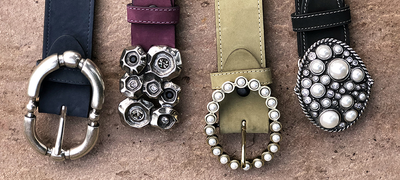
For tailored dressing, a clean buckle in solid brass, silver plating or a refined aged-metal finish gives the belt a disciplined, enduring quality. The buckle should sit comfortably within the width of the strap, with enough metal visible to look purposeful but not so much that it dominates a suit or delicate fabric.
More decorative buckles deserve room to speak. Crystal embellishment, sculptural metalwork and equestrian-inspired hardware are at their best against simple garments: dark denim, a monochrome dress, a crisp white shirt or a plain cashmere knit. When the buckle is the point of interest, let the remaining accessories be quieter.
An interchangeable buckle system makes this balance far easier to achieve. One beautifully made leather strap can take on a completely different character with a polished classic buckle, an aged-metal option or a crystal design. Clara Perri’s detachable approach allows the belt to respond to an occasion without compromising on the quality of the leather beneath it.
Consider where the belt sits
Placement changes proportion as much as width does. A belt worn at the natural waist creates the clearest hourglass effect, particularly over dresses, knitwear and tailored outerwear. It can make the legs appear longer when paired with high-rise trousers or a skirt, provided the top half of the outfit is not overly bulky.
A drop-waist belt has a different purpose. Positioned lower on the hip, it creates a more relaxed, elongated mood and works especially well with tunics, longer knitwear, fluid dresses and low-slung tailoring. It is less about waist definition and more about texture, colour and movement. A softer suede or narrower leather belt often suits this placement because it does not feel too rigid across the hip.
For trousers, use the existing waistband as your guide, then judge the overall line in a full-length mirror. A belt that matches the scale of the loops will appear deliberate. If the trousers have substantial loops, a very slim strap can look lost. With finer tailored loops, an overly wide belt may bunch the fabric or make the waistband feel crowded.
Use colour and texture to control emphasis
Contrast draws attention. A black belt over a pale dress creates a strong horizontal line, while a belt close in colour to the garment defines shape more subtly. Neither approach is superior. The choice depends on whether you want the belt to become a focal point or to support the silhouette quietly.
For a long, lean effect, choose a belt in a similar tone to your trousers, skirt or dress. This can be especially elegant with monochrome dressing, where the texture of Full Grain leather or soft Italian Nubuck provides distinction without breaking the line. A matching or near-matching belt and shoe pairing can bring further order to a tailored look, although they need not be identical.
Use contrast when an outfit needs punctuation. A rich tan vintage calf belt against navy denim, a dark brown strap over cream tailoring, or a coloured suede belt with a neutral dress can give otherwise simple pieces a considered finish. Texture carries its own scale, so hair-on cowhide and pronounced grain tend to look most at home with denim, knitwear and relaxed fabrics rather than very fine evening silks.
Proportion by occasion
For business and formal events, keep the strap clean, the width moderate and the hardware considered. A classic leather belt should support the cut of the clothing, not distract from it. A polished buckle, smooth leather and a precise fit communicate the same attention to detail as well-made shoes or a properly tailored jacket.
For weekends and travelling, there is more scope for texture and personality. Denim welcomes a slightly broader belt, aged metal, suede or vintage finishes. Equestrian-inspired buckles bring a confident note to boots, knitwear and country dressing, while a distinctive buckle can make a simple white shirt and jeans feel complete.
For evening, the garment should lead. A slim belt with crystal detail can bring light to a black dress, while a wide statement belt may suit a minimal column gown or structured jumpsuit. If the dress already has embellishment, drape or dramatic print, a quieter buckle and close tonal leather will usually feel more refined.
The fit that preserves the line
Even ideal proportions fail if the belt is too tight or too long. A belt should fasten comfortably at the middle hole where possible, allowing room for natural variation and preserving a balanced length at the end. The tail should sit neatly through the keeper rather than extend awkwardly across the hip.
When choosing a bespoke or carefully sized belt, measure a belt you already wear successfully from the end of the buckle to the hole you use most often. This gives a more reliable result than relying on trouser size alone, particularly across different rises and designers. If you intend to wear the belt over coats or heavier knitwear, allow for that additional depth.
A well-proportioned belt does more than hold an outfit together. It gives beautiful leather, considered hardware and skilled craftsmanship a proper place within the silhouette, allowing personal style to appear composed rather than overworked.

Leave a comment