

A Guide to English Leather Craftsmanship
A belt is often the smallest piece in an outfit, yet it sits at the point where proportion, texture and personal style meet. The difference between an ordinary belt and one that becomes part of a wardrobe for years lies in the hand behind it. This guide to English leather craftsmanship looks closely at the materials, processes and finishing details that give a handmade belt its character.
For those who buy fewer, better accessories, craftsmanship is not an abstract promise. It can be seen in the clean line of an edge, felt in the suppleness of a strap and recognised in hardware that gains presence rather than wear. English workshop making brings patience and precision to each of these decisions.
A Guide to English Leather Craftsmanship: Start with the Hide
No amount of skilled finishing can transform an inferior hide into exceptional leather. The process begins with selection: assessing the grain, weight, temper and natural markings of each skin before it is cut. Fine leather is not required to be visually uniform. Subtle variations in grain or tone are often evidence of a natural material, chosen for depth rather than artificial perfection.
Italian Nubuck offers a soft, brushed surface with a refined, velvety hand. It lends itself beautifully to relaxed tailoring, dresses and contemporary casual dressing, although it benefits from thoughtful care in wet weather and around oils. Full Grain leather retains the surface of the hide, making it a strong choice for belts intended to develop a richer patina through regular wear. Vintage calf has a distinctive, gently aged appearance from the outset, while suede offers a softer, more tactile contrast to polished leather.
The right leather depends on the intended silhouette as much as personal preference. A wide waist belt may call for body and structure, whereas a slim strap for tailoring needs enough firmness to hold its line without feeling rigid. Hair-on cowhide makes a more expressive choice, bringing texture to otherwise simple denim or knitwear, but is best reserved for occasions when its finish will not meet excessive friction.
Cutting for strength, not simply economy
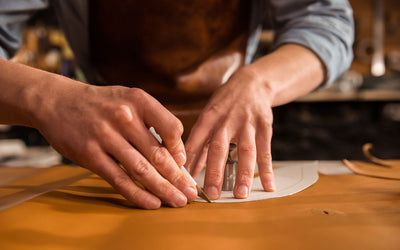
Leather has direction. The most resilient sections of a hide are selected for straps because they resist stretching and maintain a clean profile at the buckle. This is one of the quiet distinctions of considered belt making: the craftsperson cuts with the material, rather than treating every area as interchangeable.
A strap that has been cut correctly will sit smoothly at the waist or hip and keep its shape over time. It also ensures that punch holes remain neat and that the leather does not distort around the buckle tongue. In a handmade workshop, this judgement is made hide by hide, rather than dictated solely by a production template.
The Construction Behind a Beautiful Belt
A refined belt should have a considered reverse as well as a beautiful face. Depending on the leather and design, the strap may be finished with a complementary lining, carefully bonded and stitched to create a clean, lasting structure. Other belts allow the character of a single premium hide to take centre stage, with a finished flesh side that feels smooth against clothing.
Stitching is both functional and visual. Evenly placed stitches strengthen areas under pressure, particularly near the buckle fold, while their scale and colour influence the final mood of the piece. Tonal stitching creates a discreet, classic finish. A subtle contrast can bring a contemporary edge to a simple leather strap. Neither is inherently superior - the choice should complement the leather, buckle and the way the belt will be worn.
The buckle fold deserves particular attention. This area carries repeated movement every time a belt is fastened, adjusted or changed. A properly constructed fold sits flat, feels substantial and avoids unnecessary bulk. On an interchangeable system, it must also allow the buckle to be removed and refitted with ease, without compromising the polished appearance of the belt.
Edges that reward a closer look
The edge of a leather belt is where workshop discipline becomes most visible. Once cut, the edge is smoothed, coloured or sealed where appropriate, then worked until it feels even to the touch. This process is not hurried. Uneven edge paint, rough fibres or cracking along the sides can make an otherwise attractive belt look tired prematurely.
Some leathers suit a coloured, hand-finished edge that gives a crisp, tailored outline. Others are more compelling when their natural edge is burnished, revealing the material’s depth. Both approaches can be beautiful, provided they respect the nature of the leather rather than masking it.
Hardware Is Part of the Craft
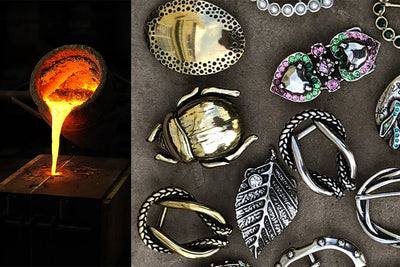
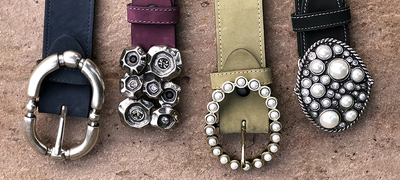
A buckle is not a secondary component. It sets the tone of a belt, changes its formality and determines how the strap performs in use. Solid Brass has a pleasing weight and a warmth that suits full-grain, vintage calf and equestrian-inspired styles. Silver-plated finishes can feel sharper and more architectural, while aged-metal hardware introduces a more relaxed, lived-in note.
Quality hardware should be balanced in the hand, smoothly finished and proportionate to the strap. A delicate buckle can refine a narrow belt worn with trousers or a silk dress; a larger frame buckle gives a wide belt the visual authority needed to define the waist over knitwear, tailoring or a coat. Crystal embellishment adds light and occasion, especially when the surrounding leather remains beautifully restrained.
Interchangeable buckles introduce another level of discernment. They allow one well-made strap to shift between classic, contemporary, equestrian and evening settings. This is not simply a practical feature. It encourages a more personal way of building an accessories wardrobe: selecting a leather colour and texture that feels right, then changing the hardware as the occasion or season asks.
At Clara Perri, this approach is expressed through handmade English belts designed to work with detachable buckles, allowing each piece to be refreshed rather than replaced.
How to Recognise Lasting Craftsmanship
The best test is not whether a belt looks immaculate under studio lighting, but whether it appears composed when held, fastened and worn. Examine the line of the strap. It should be straight and evenly cut, without wavering edges or an excessively thin feel. Flex the leather gently. It should bend with confidence, not feel brittle or reveal a surface that looks likely to split.
Look at the stitching around the buckle attachment and at any lined construction. Stitches should be secure, regular and free from loose ends. The buckle should sit centred, with no awkward twisting when fastened. If the belt uses an interchangeable fitting, changing the buckle should feel intentional and secure rather than fiddly.
It is also worth considering how the belt will age. Full Grain leather may acquire creases, a deeper tone and a soft sheen over time. Nubuck and suede will show their own signs of use, often becoming more individual with careful wear. These are not necessarily flaws. They are the record of a natural material becoming yours.
Care That Respects the Material
Good leather benefits from measured care, not constant treatment. Store belts unfastened or gently coiled in a dry place, away from strong sunlight and radiators. Avoid hanging a heavy buckle from a narrow strap for long periods, as this can place unnecessary strain on the leather.
For smooth leather, occasional cleaning with a soft dry cloth is usually enough, followed by a suitable leather conditioner only when the material begins to feel dry. Nubuck and suede require a specialist brush and a lighter touch. Hair-on cowhide should be brushed gently in the direction of the hair and kept clear of excessive moisture. When in doubt, test any product on an inconspicuous area first.
A belt made with care does not demand a ceremonial routine. It asks only to be worn thoughtfully, stored properly and chosen for the life you actually lead. Over time, the finest English leather craftsmanship becomes more than a finishing touch: it becomes the detail that makes familiar clothes feel considered again.
Leave a comment