

Heritage Belt Review for Lasting Quality
A belt earns the word heritage not through a distressed finish or an old-fashioned buckle, but through the quality that reveals itself after years of wear. This heritage belt review looks beyond first impressions to consider the materials, construction and proportions that make a leather belt a genuine wardrobe investment.
For those who build a considered wardrobe, a well-made belt is not a minor finishing touch. It defines the line of tailored trousers, gives a silk dress structure, brings polish to denim and can change the character of a coat worn open. The right piece should feel purposeful from the first fastening, then become more individual as the leather settles to its owner.
What a Heritage Belt Should Be Made From
The leather is where any serious assessment begins. Full Grain leather is prized because the natural surface of the hide is retained rather than heavily corrected. It has strength, visible character and the capacity to develop a handsome patina. Small variations in grain are not faults to conceal. They are part of what gives a fine leather belt its distinction.
Italian Nubuck offers a different expression of luxury. Its velvety, brushed surface has a refined softness that works beautifully with relaxed tailoring, knitwear and suede footwear. It does, however, ask for thoughtful care. Nubuck can mark more readily than smooth leather, particularly in wet weather, so it is best chosen by someone who values texture and accepts that a much-loved accessory will acquire a lived-in character.
Vintage calf leather sits comfortably between polish and ease. It often has a supple hand from the outset, with depth of colour that lends itself to everyday wear. For a belt intended to work across jeans, chinos and softer wool trousers, calfskin can be an exceptionally versatile choice.
A convincing heritage belt should not feel thin, plasticky or overly uniform. The edge should be neatly finished, the leather substantial enough to hold its shape, and the reverse considered rather than treated as an afterthought. Fine leather will soften with use, but it should not quickly stretch around the holes or curl at the tip.
Heritage Belt Review: The Importance of Construction
Construction determines whether a belt merely looks luxurious or continues to perform. A carefully cut strap, properly finished edges and secure stitching all contribute to longevity. On a stitched belt, the thread should lie evenly and closely, without loose ends or irregular tension. On a more minimal strap, clean edge finishing and precise shaping become even more visible.
The keeper, the small loop that holds the belt end in place, is a useful detail to examine. It should sit comfortably on the strap without being so tight that it catches or so loose that it slides away. This may appear a modest consideration, yet it affects the way the belt wears every day.
There is also a practical balance between firmness and flexibility. A belt for tailoring should be smooth enough to pass cleanly through finer trouser loops, while a wider casual belt needs enough body to retain a confident silhouette over denim. A very rigid strap can feel cumbersome; one that is too soft may lose its presence within a season. The best examples are structured, supple and proportioned for their intended purpose.
Handmade production matters here because small decisions cannot be separated from the finished result. Skilled artisans recognise the particular behaviour of leather, adjust the finishing process accordingly and inspect the details that machinery alone can overlook. Handmade in England is not simply a provenance statement. It is an approach that places material knowledge and finish at the centre of the product.
Hardware That Holds Its Presence
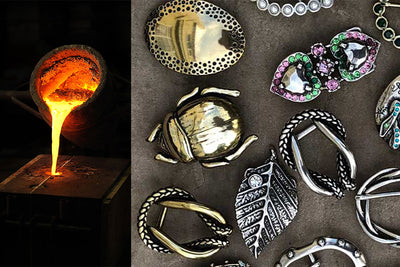
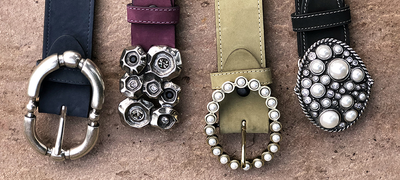
A buckle is both mechanism and jewellery. It must fasten reliably, but it also sets the mood of the belt. Solid Brass has reassuring weight and a warm tone that develops character over time. Silver-plated and polished metal finishes offer a cleaner, more formal look, while aged-metal hardware can bring understated depth to casual leather and equestrian-inspired styles.
In a heritage belt, the buckle should feel proportionate to the strap. An oversized buckle on a narrow formal belt can appear forced, just as a delicate buckle may disappear against a broad, textured leather. The prong should move cleanly, the bar should sit securely, and the hardware should have enough substance that it does not feel like a decorative afterthought.
Crystal buckles deserve a different consideration. They introduce light and occasion, especially when paired with a sleek black, deep brown or jewel-toned strap. Their success depends on restraint: a finely made crystal buckle should feel deliberate and elegant, not costume-like. It is an excellent choice for an evening dress, a dinner jacket or a simple knit and trousers when the rest of the outfit is quiet.
Fit Is the Difference Between Wearing and Styling
Even beautiful leather and exceptional hardware cannot compensate for an incorrect fit. A belt should fasten comfortably at the hole that allows the strap end to rest neatly beyond the first keeper. If it is pulled to the tightest hole, there is little room for variation; if it is fastened at the loosest, excess length can interrupt an otherwise considered silhouette.
The correct width depends on the wardrobe and the wearer. Slim belts are natural companions to dresses, skirts and tailored trousers with narrow loops. A medium width is often the most flexible choice for daily dressing, while wide and drop-waist styles create a more defined styling statement over dresses, blazers and coats. Men’s belts commonly require a stronger visual presence for denim and traditional tailoring, though the same principle applies: proportion should serve the clothing, not compete with it.
When measuring, use a belt that fits well and measure from the end of the buckle to the hole used most often. This is more dependable than relying on trouser size alone, particularly where rise, fabric thickness and styling preference vary. A belt worn at the waist will require a different measurement from one worn lower on the hips.
Interchangeable Buckles Add a Modern Reason to Buy Well
The most persuasive contemporary interpretation of a heritage belt is not fixed in one look. An interchangeable buckle system allows a single premium strap to move between occasions. A polished silver buckle may suit weekday tailoring, a solid brass finish can bring warmth to weekend denim, and a crystal design can transform the same leather for evening.
This modular approach is practical, but it also honours the value of the materials. Rather than accumulating several lower-quality belts, the wearer can build a small personal collection of straps and buckles with distinct roles. It encourages more thoughtful ownership, where the leather remains central and the hardware is chosen to reflect mood, season or setting.
Clara Perri approaches this idea through handmade straps and detachable buckles designed to be styled together with precision. It is particularly appealing for travellers and for anyone who prefers a concise wardrobe with genuine range. The trade-off is that the fastening system should be checked for compatibility and ease before purchase. A modular belt is only as satisfying as the confidence with which each component connects.
The Signs of Value After the First Season
A heritage belt should improve rather than deteriorate with regular use. Smooth leather may deepen in tone around the buckle holes and edges. Brass may acquire a softer, richer surface. Nubuck may show gentle shifts in texture. These are signs of use, not necessarily wear-out, provided the strap remains sound and the finish intact.
Care is simple but worthwhile. Rotate belts rather than wearing one every day, allow leather to dry naturally if caught in rain, and store straps loosely rather than tightly folded. Use products suited to the specific leather: conditioning treatments for smooth full-grain leather are not appropriate for nubuck or suede. Hardware can be wiped with a soft dry cloth, avoiding aggressive polishing that could alter an aged finish.
A belt becomes heritage-worthy when it offers both permanence and personality. Choose the leather for how you genuinely dress, the width for the loops and silhouettes you wear most, and the buckle for the level of statement you enjoy. The most satisfying choice will not simply complete an outfit this season; it will become one of the accessories you reach for without having to think twice.

Leave a comment