

Italian Leather Review: What Quality Really Means
A belt is often the smallest piece of an outfit, yet it works unusually hard. It defines the waist of a dress, gives tailoring a finished line and brings intention to denim, knitwear or riding-inspired layers. This Italian leather review looks beyond the label to the qualities that make a leather belt feel considered from the first wear and become more individual over time.
Italian leather has earned its reputation through a combination of material selection, specialist tanning and a long-established culture of finishing. But the phrase alone is not a guarantee of excellence. The hide, tannage, thickness, dyeing, cut, edge work and hardware all determine whether a belt will wear beautifully or merely look convincing when new.
Italian Leather Review: What Sets It Apart
The best Italian leathers begin with carefully selected hides, chosen for their natural character as much as their surface consistency. Full-grain leather retains the outermost layer of the hide. Its grain is not sanded away or heavily corrected, so subtle variation remains visible. Fine pores, gentle creases and small changes in tone are signs of a natural material, not defects to be concealed.
This matters because the grain carries much of the leather’s strength. A well-made full-grain belt will soften with use while retaining structure, developing a depth of colour and patina that cannot be reproduced by a synthetic coating. It is particularly suited to classic belts, wide waist belts and pieces intended to be worn frequently for years.
Italian tanneries are also admired for their command of colour. The difference is often felt before it is seen: a deep chocolate brown with warmth beneath it, a black with a rich rather than flat appearance, or a navy that changes gently between daylight and evening. Good dyeing allows the leather to retain visual depth instead of leaving it looking painted on the surface.
That said, the best choice depends on how the belt will be worn. A smooth, firm full-grain calf leather offers polish and longevity for tailored trousers or formal dresses. Italian nubuck has a soft, velvety hand and a more relaxed luxury, ideal for softer separates and casual dressing. Suede brings tactile richness, while hair-on cowhide introduces a more expressive finish that suits a statement buckle or equestrian-inspired silhouette.
The Difference Between Full Grain and Corrected Leather
The term ‘genuine leather’ can be misleading. It simply confirms that some form of leather has been used; it does not identify the grade, tannage or construction. For a belt that will be handled, flexed and fastened thousands of times, those details are far more useful.
Full-grain leather is generally the most enduring option because its natural surface remains intact. Top-grain leather has been lightly sanded to create a more uniform finish and can still be beautiful, particularly when carefully finished. Corrected or heavily coated leather may initially appear immaculate, but the dense surface treatment can crack or peel with repeated bending, especially around the buckle holes and tip.
A luxury belt should not need to disguise its material. Look for a surface with a natural response to light rather than an overly plastic shine. On smooth leather, the grain should appear refined and alive. On nubuck and suede, run a fingertip across the nap: a quality hide will show a gentle shift in tone and feel even, not thin or papery.
How to Assess an Italian Leather Belt
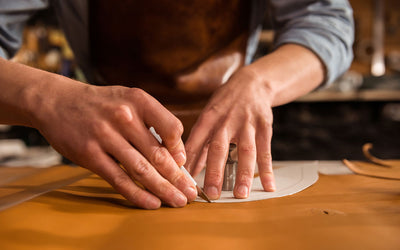
A close look at the strap reveals more than a product photograph ever can. Begin with the cut. Leather should be cut cleanly along the length of the hide, with the grain running consistently. A well-proportioned strap feels balanced in the hand: substantial enough to hold its shape, but not so thick that it becomes stiff or cumbersome at the waist.
Then examine the edges. On a fine belt, edges are carefully shaped, coloured and polished or painted in controlled layers. This protects the exposed leather fibres and gives the profile a precise finish. Rough, uneven or rapidly separating edges are often an early indication that a belt has been made for a short life.
The lining also deserves attention. An unlined strap can be entirely appropriate for certain relaxed suede or nubuck styles, where the reverse has its own natural appeal. For more structured belts, a quality lining adds comfort, stability and a tailored finish. It should sit smoothly without bubbling, lifting or feeling conspicuously synthetic.
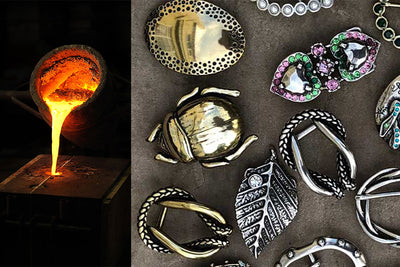
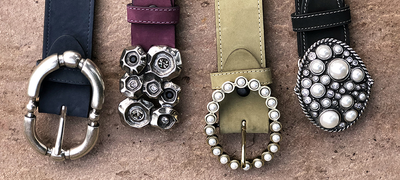
Finally, consider the buckle as part of the construction, not simply decoration. Solid brass has pleasing weight and can acquire a handsome aged character. Silver-plated and aged-metal finishes each create a distinct visual mood, from crisp evening polish to softened vintage character. The buckle tongue should move cleanly, and the attachment should feel secure without making the belt difficult to change or adjust.
Why Construction Matters as Much as the Hide
The finest leather can still disappoint if it is assembled carelessly. Stitching should be regular, tensioned correctly and placed to support areas under strain. The buckle end needs particular care, as it carries the pull of fastening and unfastening. A belt that twists, puckers or loses its shape at this point will not deliver the clean line expected of a luxury accessory.
Handmade construction brings a practical advantage as well as a sense of provenance. Skilled makers can select materials thoughtfully, refine the strap by hand and check the finish at each stage. At Clara Perri, Italian leather is worked by English artisans who understand that a belt must perform as elegantly as it looks - across a tailored waist, through trouser loops or worn low over a dress.
This approach is especially valuable when a belt includes interchangeable buckles. The strap must be made to accept repeated changes without compromising its shape, while the fastening system must remain unobtrusive and dependable. A modular design gives one exceptional leather strap a longer, more versatile life: change the buckle for a quieter weekday look, a crystal detail for an occasion, or aged metal for a more relaxed finish.
The Trade-Offs Worth Knowing
Natural leather asks for a little attention. Nubuck and suede can mark more readily than a smooth, sealed leather, particularly in wet weather, but their softness and tonal richness are difficult to match. Pale leathers are elegant and light-reflecting, although they require more thoughtful storage and careful wear alongside dark denim or strongly dyed fabrics.
Full-grain leather will often reveal creasing near the fastening holes as it settles to its owner. This is normal, and usually attractive. What matters is that the leather bends with a supple resilience rather than splitting at the surface. A very stiff belt may feel reassuring at first, but excessive rigidity can make it less comfortable and accelerate stress around the buckle.
There is also a distinction between a uniform finish and a characterful one. If you prefer absolute visual consistency, a more refined smooth calf leather may be the right choice. If you enjoy the individuality of material, vintage calf, nubuck and hair-on cowhide offer small variations that make each piece feel personal.
Caring for Italian Leather So It Ages Well
Good leather improves with sensible care rather than constant treatment. Store belts rolled loosely or hung by the buckle, away from direct sunlight and strong heat. Avoid folding the strap tightly, which can create a permanent crease. After wear, allow the leather to air before placing it in a wardrobe or travel case.
For smooth leather, occasional gentle cleaning with a soft dry cloth is usually sufficient. Use a suitable leather conditioner sparingly, because too much product can darken the finish or leave residue. Nubuck and suede should be brushed with an appropriate soft brush to lift the nap, rather than treated with standard creams. If a belt is caught in rain, blot it gently and allow it to dry naturally, well away from radiators.
The most useful test is a simple one: choose the leather that you will want to wear repeatedly, not merely admire when it arrives. A finely made Italian leather belt earns its place through the way it settles into your wardrobe, takes on character and makes familiar clothes feel deliberately styled.
Leave a comment